Title: Berlin 1961
Author: Frederick Kempe
Genre: Nonfiction, history
Publisher: Putnam, 2011
Source: Publisher
Read for: Indie Lit Awards, Chunkster challenge
I've heard of the Cold War and the Berlin Wall, of course. However, I knew next to nothing about them -- essentially, that the Cold War was with Russia and we were competing to have bigger weapons, and that the Berlin Wall was a wall and it was hard for East Germans to escape (this courtesy of the awesome movie Night Crossing. For serious, watch it). Berlin 1961 delineates the dangerous, intense events leading to the construction of this wall and the face-off between Russian and United States forces at Checkpoint Charlie on the wall at the end of 1961.
Honestly, I was not expecting to like this book. While I find history to be interesting, too many details are a turn-off to me. Also, I tend to like events and personal stories, not complex political intrigues. Politics make me nauseated, in a word.
However, I thought Berlin 1961 was fantastic.
I'm not sure what it was, exactly, that drew me in. And of course, it wasn't an easy book for me to read -- it took me almost a month to get through it. In all honesty, it might be the fact that I am obsessed with the movie Night Crossing and was excited to learn more about why that division existed. But I absolutely loved it.
Kempe's writing is excellent, and I think that was key to my enjoyment of the novel. As I mentioned before, I struggle with excessive detail and politics, and Berlin 1961 abounded with both. Kempe's ability to turn a phrase made the 500+ pages fluid and interesting, leading me from one idea, one conversation, one diplomatic encounter to the next.
I also appreciated Kempe's attention to the personalities of the event. I felt that I become well-acquainted with Khruschev, a man I had not even heard of. His idiosyncrasies, his calculated outbursts at meetings, and his personal agenda came together to paint a picture of who this man was in history. I also felt better acquainted with Kennedy, and in particular his vulnerabilities at the beginning of his presidency. Lesser characters were also well realized, making me feel not like a was reading a dry story of political giants but instead an intimate rendering of a complex event and the way it was shaped by individual personalities.
The topic also became interesting to me -- I knew so little about that time period and the Cold War that it was interesting to learn about why events progressed as they did. My one complaint is that Kempe assumes that we have some knowledge already. I had no idea why Berlin was divided, or for that matter why Germany was divided (and I still am not completely sure -- Berlin was so far from the rest of West Germany. How did that work, exactly? Or am I understanding incorrectly?). While I picked information up as I read, the background was never completely clear to me. A brief summary of events leading up to 1961 would have been indispensable to me.
Overall, this book was a pleasantly fascinating surprise. I had the opportunity to learn about an event in history that I previously was almost completely ignorant of, and enjoyed Kempe's excellent writing.
4 stars
Warnings: Language, maybe some descriptions of Kennedy's affairs, but nothing explicit
Showing posts with label indie lit awards. Show all posts
Social Animal by David Brooks
Tuesday, April 03, 2012
Title: Social Animal
Author: David Brooks
Genre: Nonfiction, sociology
Publisher: Random House, 2011
Source: Library
Read for: Indie Lit Awards
In The Social Animal, David Brooks creates two unique characters that navigate the waters of life successfully. Applying real studies to his fictional characters, Brooks explores the reasons for success, love, and sociality humans.
Guys, this was my favorite of the five nonfiction books that I read for the Indie Lit Awards. When explaining it to a friend, she said, "So basically it is a nonfiction book that is actually fictional?" Okay, yes, it sounds that way. But it has been done before. Jean-Jacques Rousseau created a similar situation with his treatise on education, Emile, creating a character with experiences that showed the application of his theories.
And it definitely works for Brooks in The Social Animal. We are introduced to our two central characters, Harold and Erica, following them through their early lives -- a life of privilege and attention for Harold, a life of struggle, racial tension and poverty for Erica -- through to their relationship and careers and leaving them at the end of their lives. The story is absolutely peppered with little tidbits and factoids exposing interesting details about different studies. Some of these studies are well known, such as the ubiquitous marshmallow study, in which children that are able to wait fifteen minutes to eat a marshmallow in order to receive a second are more successful in life than those who eat their marshmallow immediately. Others are more incidental, such as when Erica meets Harold and evaluates him based on his height, because tall individuals generally make more money than their shorter colleagues.
While all this information could have been clogging and oppressive, Brooks' style is such that it comes off as informative and entertaining. He employs dry humor constantly, and invents personal details from Harold and Erica's life that makes them likable and personable instead of dry research subjects. I particularly loved when Harold became enthralled with the ancient Greeks and the moments of inspiration when he worked on his project on these heroes. I was thoroughly invested, and kept coming across fascinating little "Did you know" moments that I wish I could have stored better in my brain.
My one complaint with the book is that for all intents and purposes, Harold and Erica existed in 2011 throughout their entire lifespans. When they were born, their parents were described as living a lifestyle that is current with this time period, complete with Facebook. From what I read, the time period never ended, but if we are being realistic, drastic changes are occurring at least every five years in technology and life in general. I know that Brooks couldn't possibly forecast the future (and anyway, it drove me crazy in Physics of the Future) but it would have made more sense to me logically to start Harold and Erica in the 50's or whenever they would have been born. Then again, it was a literary device and didn't have to follow normal rules of chronology, and I can see why the story would possibly not have worked as well. It just irked me slightly.
However, all in all I found this book entertaining and informative. The Social Animal is one of the most unique and interesting nonfiction books that I have ever read.
4 stars
Warnings: Language, including F bombs, and clinical descriptions of sex
Author: David Brooks
Genre: Nonfiction, sociology
Publisher: Random House, 2011
Source: Library
Read for: Indie Lit Awards
In The Social Animal, David Brooks creates two unique characters that navigate the waters of life successfully. Applying real studies to his fictional characters, Brooks explores the reasons for success, love, and sociality humans.
Guys, this was my favorite of the five nonfiction books that I read for the Indie Lit Awards. When explaining it to a friend, she said, "So basically it is a nonfiction book that is actually fictional?" Okay, yes, it sounds that way. But it has been done before. Jean-Jacques Rousseau created a similar situation with his treatise on education, Emile, creating a character with experiences that showed the application of his theories.
And it definitely works for Brooks in The Social Animal. We are introduced to our two central characters, Harold and Erica, following them through their early lives -- a life of privilege and attention for Harold, a life of struggle, racial tension and poverty for Erica -- through to their relationship and careers and leaving them at the end of their lives. The story is absolutely peppered with little tidbits and factoids exposing interesting details about different studies. Some of these studies are well known, such as the ubiquitous marshmallow study, in which children that are able to wait fifteen minutes to eat a marshmallow in order to receive a second are more successful in life than those who eat their marshmallow immediately. Others are more incidental, such as when Erica meets Harold and evaluates him based on his height, because tall individuals generally make more money than their shorter colleagues.
While all this information could have been clogging and oppressive, Brooks' style is such that it comes off as informative and entertaining. He employs dry humor constantly, and invents personal details from Harold and Erica's life that makes them likable and personable instead of dry research subjects. I particularly loved when Harold became enthralled with the ancient Greeks and the moments of inspiration when he worked on his project on these heroes. I was thoroughly invested, and kept coming across fascinating little "Did you know" moments that I wish I could have stored better in my brain.
My one complaint with the book is that for all intents and purposes, Harold and Erica existed in 2011 throughout their entire lifespans. When they were born, their parents were described as living a lifestyle that is current with this time period, complete with Facebook. From what I read, the time period never ended, but if we are being realistic, drastic changes are occurring at least every five years in technology and life in general. I know that Brooks couldn't possibly forecast the future (and anyway, it drove me crazy in Physics of the Future) but it would have made more sense to me logically to start Harold and Erica in the 50's or whenever they would have been born. Then again, it was a literary device and didn't have to follow normal rules of chronology, and I can see why the story would possibly not have worked as well. It just irked me slightly.
However, all in all I found this book entertaining and informative. The Social Animal is one of the most unique and interesting nonfiction books that I have ever read.
4 stars
Warnings: Language, including F bombs, and clinical descriptions of sex
In the Garden of Beasts by Erik Larson
Wednesday, March 28, 2012
Title: In the Garden of Beasts
Author: Erik Larson
Genre: Nonfiction, history
Publisher: Crown, 2011
Source: Received from publisher
Read for: Indie Lit Awards
The Garden of Beasts is the Tiergarten, the home of the misfit American ambassador to Germany during Hitler's rise to power, William E. Dodd. In the Garden of Beasts gives the tale of Hitler's rise to power told through the perspective of Dodd, a man desiring simplicity and frugality wrapped up in a world of intrigue and luxury, and his daughter, Martha, a glamorous socialite who became romantically entangled with many of the key players in pre-World War II Germany.
In the Garden of Beasts was an interesting experience for me. Politics and diplomacy are not areas that interest me; when I read history, I either want the epic great deeds of the age or small, intimate slivers of individuals' lives. In the Garden of Beasts, with its vast cast of characters and complicated political workings, was intimidating to me. However, the book was well written and, for the most part, enjoyable.
Larson juxtaposes the complexity of the political situation in Germany with the intimate personal details of William and Martha Dodds' lives. I knew very little about Hitler's rise to power prior to reading this book -- basically, that he worked with the leader at the time and slowly gained more influence until eventually taking over. I didn't know anything about the other main players in the story. I didn't realize that the Gestapo and the SS were secret entities (shameful). I also didn't realize how complex a role the Soviet Union played in the whole debacle (more on this in my forthcoming review of Berlin 1961). In some ways, these details were overwhelming to me, because I could not remember who was who and who was in charge of what and why that was important. To be honest, Hitler only rarely enters the story; most of the time the book deals with the smaller figures around him that buoy him up to power, and the aftermath of some of the insane actions of the time -- beatings of American tourists not giving the Heil despite a law excusing them from it, brutality against Jews, Hitler's paranoid turning against trusted advisors, mass shootings. Despite my confusion with some of the people with whom I am unfamiliar, the overall effect is powerful.
I also was very interested in Dodd and Martha. Both unique and at times difficult personalities, viewing the story through the lens of their experiences made everything more meaningful and personal. Dodd occasionally blunders, not understanding why he is expected to live such a lavish lifestyle when all he wants to do is finish his history of the Old South. Martha tries to seduce every man in sight, forming relationships with many powerful men, including a Soviet spy who tries to get her to work for them and the head of the Gestapo. She also receives steady correspondence from Carl Sandburg. Not too shabby. At times, the Dodds sympathize with the Germans, agreeing with them about "the Jewish problem" -- something that seems shocking, but must be taken with the fact that the scope of Hitler's evil actions was not near to being yet understood. As the Dodds' time in Germany passes, they become increasingly more disillusioned with Germany, but the process is a lengthy one.
In the Garden of Beasts is interesting, well-written, and well-organized. At times, it grew weighty with detail, and at times I felt left out of the loop because I had never heard of Goring (and so many others whose names I am unable to recall) and wasn't sure if I had forgotten the part where his original role was explained or if it was assumed to be common knowledge. This book is well done, but must be approached with the knowledge that there is a steep learning curve, and prior information may be necessary.
3.75 stars
Warnings: Some swearing, violence, tales of Martha's conquests (off the page)
Author: Erik Larson
Genre: Nonfiction, history
Publisher: Crown, 2011
Source: Received from publisher
Read for: Indie Lit Awards
The Garden of Beasts is the Tiergarten, the home of the misfit American ambassador to Germany during Hitler's rise to power, William E. Dodd. In the Garden of Beasts gives the tale of Hitler's rise to power told through the perspective of Dodd, a man desiring simplicity and frugality wrapped up in a world of intrigue and luxury, and his daughter, Martha, a glamorous socialite who became romantically entangled with many of the key players in pre-World War II Germany.
In the Garden of Beasts was an interesting experience for me. Politics and diplomacy are not areas that interest me; when I read history, I either want the epic great deeds of the age or small, intimate slivers of individuals' lives. In the Garden of Beasts, with its vast cast of characters and complicated political workings, was intimidating to me. However, the book was well written and, for the most part, enjoyable.
Larson juxtaposes the complexity of the political situation in Germany with the intimate personal details of William and Martha Dodds' lives. I knew very little about Hitler's rise to power prior to reading this book -- basically, that he worked with the leader at the time and slowly gained more influence until eventually taking over. I didn't know anything about the other main players in the story. I didn't realize that the Gestapo and the SS were secret entities (shameful). I also didn't realize how complex a role the Soviet Union played in the whole debacle (more on this in my forthcoming review of Berlin 1961). In some ways, these details were overwhelming to me, because I could not remember who was who and who was in charge of what and why that was important. To be honest, Hitler only rarely enters the story; most of the time the book deals with the smaller figures around him that buoy him up to power, and the aftermath of some of the insane actions of the time -- beatings of American tourists not giving the Heil despite a law excusing them from it, brutality against Jews, Hitler's paranoid turning against trusted advisors, mass shootings. Despite my confusion with some of the people with whom I am unfamiliar, the overall effect is powerful.
I also was very interested in Dodd and Martha. Both unique and at times difficult personalities, viewing the story through the lens of their experiences made everything more meaningful and personal. Dodd occasionally blunders, not understanding why he is expected to live such a lavish lifestyle when all he wants to do is finish his history of the Old South. Martha tries to seduce every man in sight, forming relationships with many powerful men, including a Soviet spy who tries to get her to work for them and the head of the Gestapo. She also receives steady correspondence from Carl Sandburg. Not too shabby. At times, the Dodds sympathize with the Germans, agreeing with them about "the Jewish problem" -- something that seems shocking, but must be taken with the fact that the scope of Hitler's evil actions was not near to being yet understood. As the Dodds' time in Germany passes, they become increasingly more disillusioned with Germany, but the process is a lengthy one.
In the Garden of Beasts is interesting, well-written, and well-organized. At times, it grew weighty with detail, and at times I felt left out of the loop because I had never heard of Goring (and so many others whose names I am unable to recall) and wasn't sure if I had forgotten the part where his original role was explained or if it was assumed to be common knowledge. This book is well done, but must be approached with the knowledge that there is a steep learning curve, and prior information may be necessary.
3.75 stars
Warnings: Some swearing, violence, tales of Martha's conquests (off the page)
Physics of the Future by Michio Kaku
Monday, March 26, 2012
Title: Physics of the Future
Author: Michio Kaku
Genre: Nonfiction, science
Publisher: Doubleday, 2011
Source: Library
Read for: Indie Lit Awards
This is going to be a quick review because life is insane, but I am drastically behind in my reviews -- I have enough to make it to May without reading another book. So here goes. :)
Michio Kaku's book has an interesting premise: Take several different technologies, such as medicine, economics, robotics, computers, and nanotechnology, and evaluate what they will be like in 2030, 2050, and 2100.
Sounds cool, right? In many ways, it was. I was introduced to countless inventions and possibilites that had never crossed my mind, and the fact that when I was in elementary school, I still had never used the internet, had a cell phone, or heard of a blog show that drastic changes are certainly possible, considering that all of these things factor very significantly into my daily life. However, Kaku did not convince me that all of these inventions are in our future. He had an arrogant tone, saying that these inventions will definitely be a part of our future lives, while citing examples of others who had said the same thing about certain technologies we have yet to see. It seemed to me as if every time he was describing something especially revolutionary he would say, "You think that this won't happen -- but it will." I needed a little more evidence to back up those claims -- the "look how far we've come lately" argument isn't quite solid enough to convince me. Many of these claims were quite extremist -- for example, Kaku claimed that physicians would be completely outdated by the year 2100, and that nanobots would scour our bodies for rogue cells and microorganisms while a computer analyzed them and prescribed treatment according to an algorithm. While nanobots rooting out cancer sounds like an excellent idea to me, I don't think an algorithm will ever completely effective in prescribing and diagnosing. Each human body is so different, and each illness somewhat unique in its way -- I think there will always be a human behind the nanobot.
I also found Kaku's writing to be somewhat lacking. Of course, his primary goal was to convey information from his primary career, science. However, I think if someone endeavors to write a book, they owe it to their reader to write well -- writing not being their primary career is not an excuse. While Kaku's ideas were conveyed clearly enough, at times transitions or explanations were a bit awkward or simplistic, brimming with enthusiasm but not always content.
However, there were some interesting ideas. As mentioned before, I love the idea of nanobots living in our bodies and destroying rogue cells that could lead to cancer. I also found Kaku's ideas on information being inserted in a chip or some other internal device for constant access to be refreshing -- I usually feel pretty fatalistic about biotechnological enhancement, but he painted the picture much more brightly than I had perceived it.
Physics of the Future will appeal to technology and science buffs and futurists, but Kaku's claims must be taken with a grain of salt. He is eager to state that his ideas are the certain truth, which gave the entire book an air of incredulity. It is an interesting but flawed book.
3 stars
Warnings: None I can think of
Author: Michio Kaku
Genre: Nonfiction, science
Publisher: Doubleday, 2011
Source: Library
Read for: Indie Lit Awards
This is going to be a quick review because life is insane, but I am drastically behind in my reviews -- I have enough to make it to May without reading another book. So here goes. :)
Michio Kaku's book has an interesting premise: Take several different technologies, such as medicine, economics, robotics, computers, and nanotechnology, and evaluate what they will be like in 2030, 2050, and 2100.
Sounds cool, right? In many ways, it was. I was introduced to countless inventions and possibilites that had never crossed my mind, and the fact that when I was in elementary school, I still had never used the internet, had a cell phone, or heard of a blog show that drastic changes are certainly possible, considering that all of these things factor very significantly into my daily life. However, Kaku did not convince me that all of these inventions are in our future. He had an arrogant tone, saying that these inventions will definitely be a part of our future lives, while citing examples of others who had said the same thing about certain technologies we have yet to see. It seemed to me as if every time he was describing something especially revolutionary he would say, "You think that this won't happen -- but it will." I needed a little more evidence to back up those claims -- the "look how far we've come lately" argument isn't quite solid enough to convince me. Many of these claims were quite extremist -- for example, Kaku claimed that physicians would be completely outdated by the year 2100, and that nanobots would scour our bodies for rogue cells and microorganisms while a computer analyzed them and prescribed treatment according to an algorithm. While nanobots rooting out cancer sounds like an excellent idea to me, I don't think an algorithm will ever completely effective in prescribing and diagnosing. Each human body is so different, and each illness somewhat unique in its way -- I think there will always be a human behind the nanobot.
I also found Kaku's writing to be somewhat lacking. Of course, his primary goal was to convey information from his primary career, science. However, I think if someone endeavors to write a book, they owe it to their reader to write well -- writing not being their primary career is not an excuse. While Kaku's ideas were conveyed clearly enough, at times transitions or explanations were a bit awkward or simplistic, brimming with enthusiasm but not always content.
However, there were some interesting ideas. As mentioned before, I love the idea of nanobots living in our bodies and destroying rogue cells that could lead to cancer. I also found Kaku's ideas on information being inserted in a chip or some other internal device for constant access to be refreshing -- I usually feel pretty fatalistic about biotechnological enhancement, but he painted the picture much more brightly than I had perceived it.
Physics of the Future will appeal to technology and science buffs and futurists, but Kaku's claims must be taken with a grain of salt. He is eager to state that his ideas are the certain truth, which gave the entire book an air of incredulity. It is an interesting but flawed book.
3 stars
Warnings: None I can think of
Lost in Shangri-La by Mitchell Zuckoff
Wednesday, March 21, 2012
Title: Lost in Shangri-La
Author: Mitchell Zuckoff
Genre: Non-fiction, history
Publisher: Harper, 2011
Source: Library
Read for: Indie Lit Awards
The nonfiction award winner for the Indie Lit Awards tells the tale of a hidden valley in New Guinea and the plane that crashes there at the end of World War II. The paltry group of survivors -- one women and two men -- are severely injured, grieving the loss of their comrades that perished on the plane, and fearful of the native inhabitants of the untouched valley, who are rumored to be warlike and cannibalistic. Lost in Shangri-La is the story of the survivors and the indigenous people interacting and the fascinating and perilous rescue mission to get them out of the difficult-to-reach valley.
While this book was my second favorite of the five Indie Lit Award shortlist books, I think it was certainly deserving of the win. The story it told was unique and thrilling -- a hidden valley untouched by modern man, a dangerous plane crash with little hope of rescue, and the added unique element of a military woman being involved in an era when women in the military were not common. There were definitely moments in this book where I felt the tension, and the problems were clear and at times, seemingly unsurmountable. The events were relayed with excellent detail that brought me into the event.
The reason for this excellent detail is Zuckoff's impeccable research. He covers his bases with interviews, letters, and photographs, even visiting Shangri-La to get the perspective of the people who remembered the plane crash and the way it overturned their previously secluded way of life. The human detail was fascinating and gave the book its real charm; while simply recounting the events would have been interesting, adding the perspectives of nearly every player made it thrilling.
Another aspect of the book that led to its selection as the nonfiction award winner was the fact that it was readable, yet intelligent. It provided information that was new -- I knew nothing about planes and gliders, for example -- but it wasn't overly dense. Part of it is the nature of the story -- a book about a rescue from a hidden valley is going to be lighter and more exciting to read than a complex political event (at least for an apolitical person like myself) -- but part of it is the skill with which Zuckoff presented his story.
Lost in Shangri-La is exciting, well-written and researched, and unique, telling a story with which few will be familiar. Any World War II buff will enjoy adding this story to the vast collection of works about World War II, and many who may not be greatly interested in history will still find something to appreciate in Lost in Shangri-La.
4 stars
Warnings: Graphic descriptions of plane crash, injury, and native warfare, language
Author: Mitchell Zuckoff
Genre: Non-fiction, history
Publisher: Harper, 2011
Source: Library
Read for: Indie Lit Awards
The nonfiction award winner for the Indie Lit Awards tells the tale of a hidden valley in New Guinea and the plane that crashes there at the end of World War II. The paltry group of survivors -- one women and two men -- are severely injured, grieving the loss of their comrades that perished on the plane, and fearful of the native inhabitants of the untouched valley, who are rumored to be warlike and cannibalistic. Lost in Shangri-La is the story of the survivors and the indigenous people interacting and the fascinating and perilous rescue mission to get them out of the difficult-to-reach valley.
While this book was my second favorite of the five Indie Lit Award shortlist books, I think it was certainly deserving of the win. The story it told was unique and thrilling -- a hidden valley untouched by modern man, a dangerous plane crash with little hope of rescue, and the added unique element of a military woman being involved in an era when women in the military were not common. There were definitely moments in this book where I felt the tension, and the problems were clear and at times, seemingly unsurmountable. The events were relayed with excellent detail that brought me into the event.
The reason for this excellent detail is Zuckoff's impeccable research. He covers his bases with interviews, letters, and photographs, even visiting Shangri-La to get the perspective of the people who remembered the plane crash and the way it overturned their previously secluded way of life. The human detail was fascinating and gave the book its real charm; while simply recounting the events would have been interesting, adding the perspectives of nearly every player made it thrilling.
Another aspect of the book that led to its selection as the nonfiction award winner was the fact that it was readable, yet intelligent. It provided information that was new -- I knew nothing about planes and gliders, for example -- but it wasn't overly dense. Part of it is the nature of the story -- a book about a rescue from a hidden valley is going to be lighter and more exciting to read than a complex political event (at least for an apolitical person like myself) -- but part of it is the skill with which Zuckoff presented his story.
Lost in Shangri-La is exciting, well-written and researched, and unique, telling a story with which few will be familiar. Any World War II buff will enjoy adding this story to the vast collection of works about World War II, and many who may not be greatly interested in history will still find something to appreciate in Lost in Shangri-La.
4 stars
Warnings: Graphic descriptions of plane crash, injury, and native warfare, language
Indie Lit Awards Winners Announced!
Monday, March 19, 2012
Many of you already know that I was a voting member on the Nonfiction Panel for this year's Indie Lit Awards. The winners have been announced, and I will finally have the opportunity to share the reviews of the books I have been reading over the last several months. The winner of the nonfiction indie lit award is:
Lost in Shangri-La by Mitchell Zuckoff
The runner up is:
Berlin 1961 by Frederick Kempe
I learned so much from reading this books, as well as the other three that were on the nonfiction short-list. That is why I love nonfiction -- it gives me the opportunity to dive into subjects that I haven't had a chance to learn about before (a valuable experience for someone who changed her college major seven times).
The winners in the other categories are:
Biography/Memoir
Winner: Little Princes by Conor Grennan
Runner-Up: Battle Hymn of the Tiger Mother by Amy Chua
GLBTQ
Winner: Nina Here Nor There: My Journey Beyond Gender by Nick Krieger
Runner-Up: Huntress by Malinda Lo
Fiction
Winner: Silver Sparrow by Tayari Jones
Runner-Up: Dance Lessons by Aine Greaney
Mystery
Winner: A Trick of the Light by Louise Penny
Runner-Up: Fun and Games by Duane Swierczynski
Poetry
Winner: Catalina by Laurie Soriano
Runner-Up: What Looks Like an Elephant by Edward Nudelman
Speculative Fiction
Winner: Ready Player One by Ernest Cline
Runner-Up: A Monster Calls by Patrick Ness
Sunday Salon: Indie Lit Awards and updates
Sunday, January 15, 2012
So, guess what? The Indie Lit Awards short lists are up! You probably already know this if you are interested in the Indie Lit Awards, but just in case you missed them, you can find the complete short lists here.
I am a voting member in the Nonfiction division, so I get to read the five books on the shortlist and vote for the finalist and winner at the beginning of March. I won't be reviewing the books until after the winners are announced, but here are the ones I'll be reading, so you can look forward to a marathon of nonfiction reviews once the winners are announced:
* In the Garden of Beasts by Erik Larson
* Lost in Shangri-la by Mitchell Zuckoff
* Berlin 1961 by Frederick Kempe
* Physics of the Future by Michio Kaku
* The Social Animal by David Brooks
Pretty good list, right? I'm looking forward to all of these and am hoping to dive into The Social Animal this week. For some reason, I am finding myself reading quite a bit of other nonfiction as well. I hardly read any last year -- I was really into YA and discovering how great that genre is. Now I've cooled off a little on YA -- I still read about one a week, but it isn't all I want to read anymore. The way we can change what we read and be interested in so many things is one of my favorite things about reading.
I also thought I'd give you guys a mini-update. After being home from our first vacation (LA/Mexico/Modesto/Visalia/San Francisco) for a week, we took another little trip to LA this weekend for my husband's interview at the UCLA dental school. He had a great interview there and will find out in a week or two if he has been accepted. While he has enjoyed the other dental schools he has visited and has already been accepted to one in Phoenix, we are thinking this school in LA might end up being the right one for us! There is also a really great job that I want to apply for there -- a nurse residency at a pediatric hospital not too far away from UCLA. We've already found some apartments we like that are much cheaper than those in San Francisco and plus, the school is right next to the Los Angeles Temple. While we still don't really know what we are doing, I love that things are finally coming together. My husband also found out that he is being offered the Army Health Sciences Scholarship to pay for dental school, so after dental school we should have some traveling and adventures waiting for us after school is finished as well.
While my husband was off interviewing, I took a class with my grandma and aunt and made this purse:
Okay, that's almost true. This is the instructor's purse -- mine is tan. But I haven't taken a picture of mine, and mine looks just like this other than the color. It was really fun, and I have never made anything like that before, so I was excited that it turned out well.
This week, I am hoping to get caught up in school work (how is it possible to be behind already, right?) , get into my Indie Lit Awards reading, watch tonight's episode of Downton Abbey, and start working out again. Should be busy, but good. Hope you all have a great week as well!
I am a voting member in the Nonfiction division, so I get to read the five books on the shortlist and vote for the finalist and winner at the beginning of March. I won't be reviewing the books until after the winners are announced, but here are the ones I'll be reading, so you can look forward to a marathon of nonfiction reviews once the winners are announced:
* In the Garden of Beasts by Erik Larson
* Lost in Shangri-la by Mitchell Zuckoff
* Berlin 1961 by Frederick Kempe
* Physics of the Future by Michio Kaku
* The Social Animal by David Brooks
Pretty good list, right? I'm looking forward to all of these and am hoping to dive into The Social Animal this week. For some reason, I am finding myself reading quite a bit of other nonfiction as well. I hardly read any last year -- I was really into YA and discovering how great that genre is. Now I've cooled off a little on YA -- I still read about one a week, but it isn't all I want to read anymore. The way we can change what we read and be interested in so many things is one of my favorite things about reading.
I also thought I'd give you guys a mini-update. After being home from our first vacation (LA/Mexico/Modesto/Visalia/San Francisco) for a week, we took another little trip to LA this weekend for my husband's interview at the UCLA dental school. He had a great interview there and will find out in a week or two if he has been accepted. While he has enjoyed the other dental schools he has visited and has already been accepted to one in Phoenix, we are thinking this school in LA might end up being the right one for us! There is also a really great job that I want to apply for there -- a nurse residency at a pediatric hospital not too far away from UCLA. We've already found some apartments we like that are much cheaper than those in San Francisco and plus, the school is right next to the Los Angeles Temple. While we still don't really know what we are doing, I love that things are finally coming together. My husband also found out that he is being offered the Army Health Sciences Scholarship to pay for dental school, so after dental school we should have some traveling and adventures waiting for us after school is finished as well.
While my husband was off interviewing, I took a class with my grandma and aunt and made this purse:
Okay, that's almost true. This is the instructor's purse -- mine is tan. But I haven't taken a picture of mine, and mine looks just like this other than the color. It was really fun, and I have never made anything like that before, so I was excited that it turned out well.
This week, I am hoping to get caught up in school work (how is it possible to be behind already, right?) , get into my Indie Lit Awards reading, watch tonight's episode of Downton Abbey, and start working out again. Should be busy, but good. Hope you all have a great week as well!
The Sunday Salon: Events coming up
Sunday, November 06, 2011
Hello readers! How has your week been? For some reason I have been absolutely exhausted and not especially effective, which is always disappointing but a fact of life I suppose as the year winds down. I got started with my NaNoWriMo project. Unfortunately, I am already extremely behind. However, this week looks as if it might be slightly less stressful, so hopefully I can play catch up a little bit and stay in the running.
I've been blogging since September of 2010, and while I have learned quite a bit about blogging since my baby blogger days, I am still trying to figure out certain aspects of book blogging. I think the biggest struggle for me is structuring my reading vs. going with whatever I want. Yesterday I went to the library with every intention of only picking up the book that had come in for me on hold (Lola and the Boy Next Door! !!!), but instead I came home with four books, and the other three certainly were not on my TBR or any challenge lists for this year. I've come to terms with the fact that I am not going to finish all the challenges I signed up for this year; however, there are a few that I am still hoping to complete. In addition, I add books to my TBR every day -- It is 227 books long on Goodreads, and there are also several books on my shelves that aren't "officially" added to my TBR, but which I am hoping to read as well. Earlier this year I declared that I wouldn't care about challenges, and that I didn't want to add stress to my reading. However, I didn't delete any of my challenges, and as the new challenges for 2012 are popping up, I am urged to join so many of them! I am even planning on hosting a challenge next year (more information about that next Sunday).
I guess my question to all of you (one that is asked frequently in the book blogging world, but one I nevertheless still feel as if I have no satisfying answer to) is, do you prefer to set goals and have lists about your reading, or not? I think the answer for me is that I love making those lists and goals -- I don't think I can help it, with the way my mind is set up. I think the thing I need to get over is forgiving myself for not completing those lists. It is fun to set goals for reading, but they should be flexible. This isn't earning a PhD. This isn't really going to affect anyone but myself, so if it isn't working for me, if it is making me stressed, it needs to be released.
This post is going on much longer than I intended. I actually planned on listing some of the events coming up in the next few weeks that I am excited to join. So, after all of that metaphysical pondering about the nature of such things, here are some events that I am excited about and that you may want to participate in as well (if, of course, you've resolved the extremely important matter of deciding whether or not participating in such things is wise for you).
First of all, I just wanted to remind everyone that the Indie Lit Awards are still accepting nominations for the best books published in 2011. Any reader can nominate this year (unless you were involved with the publication in the book. You know, ulterior motives), and if you are reading this blog I can only assume that you are in fact a reader, so get over there and nominate. Pleaseandthankyou.
Secondly, Tea with Transcendentalists is coming up. Reading Ralph Waldo Emerson's essay, "Self Reliance," was a pivotal moment in my education and I am excited (and a bit intimidated) to read more of his essays. Please join us in learning more about Emerson and his colleagues from November 15-December 15.
Thirdly, Yvann is hosting an event called Advent with Austen. I had never thought of this before, but Jane Austen really does seem like a cozy, Christmas-y friend for Advent. I am hoping to reread Persuasion and possibly Sense and Sensiblity as well. Part of me feels silly for doing so much rereading when there are so many other books to read out there, clamoring for my attention on the TBR list, but honestly, if we don't have time to revisit the books we love, what is the point of adding more to the list?
Finally, Sarah is hosting a second incarnation of the Back to the Classics Challenge. This is one of the challenges I am kinda stressed about finishing this year... but I love it. I want to do it again. And I really want to finish it this time, so I can feel justified in pushing myself to do it again next year. The categories this year are:
1. 19th century classic
2. 20th century classic
3. Reread a classic of your choice (Oh joy. I can do this one!)
4. Classic play
5. Classic murder/horror/crime novel
6. Classic romance
7. A classic that has been translated from another language into your language
8. A classic award-winner
9. A classic set in a country you will probably never visit.
I don't have too many ideas at this point, but I will figure it out as I go.
And while we're going over this, I'll probably participate in the Chunkster challenge again and the one I am hosting. I should probably keep it to that, but I doubt if I will be able to. There are two other challenges as well that look lovely to me -- a Shakespeare reading challenge and a medieval literature challenge -- but I am trying to suck it up, put them on my TBR and release the pressure.
Are you still here? You are amazing for putting up with my ramblings for that long. Go enjoy your Sunday!
PS: Daylight Savings. Of course you put up with me that long. You have an entire extra hour of life today.
I've been blogging since September of 2010, and while I have learned quite a bit about blogging since my baby blogger days, I am still trying to figure out certain aspects of book blogging. I think the biggest struggle for me is structuring my reading vs. going with whatever I want. Yesterday I went to the library with every intention of only picking up the book that had come in for me on hold (Lola and the Boy Next Door! !!!), but instead I came home with four books, and the other three certainly were not on my TBR or any challenge lists for this year. I've come to terms with the fact that I am not going to finish all the challenges I signed up for this year; however, there are a few that I am still hoping to complete. In addition, I add books to my TBR every day -- It is 227 books long on Goodreads, and there are also several books on my shelves that aren't "officially" added to my TBR, but which I am hoping to read as well. Earlier this year I declared that I wouldn't care about challenges, and that I didn't want to add stress to my reading. However, I didn't delete any of my challenges, and as the new challenges for 2012 are popping up, I am urged to join so many of them! I am even planning on hosting a challenge next year (more information about that next Sunday).
I guess my question to all of you (one that is asked frequently in the book blogging world, but one I nevertheless still feel as if I have no satisfying answer to) is, do you prefer to set goals and have lists about your reading, or not? I think the answer for me is that I love making those lists and goals -- I don't think I can help it, with the way my mind is set up. I think the thing I need to get over is forgiving myself for not completing those lists. It is fun to set goals for reading, but they should be flexible. This isn't earning a PhD. This isn't really going to affect anyone but myself, so if it isn't working for me, if it is making me stressed, it needs to be released.
This post is going on much longer than I intended. I actually planned on listing some of the events coming up in the next few weeks that I am excited to join. So, after all of that metaphysical pondering about the nature of such things, here are some events that I am excited about and that you may want to participate in as well (if, of course, you've resolved the extremely important matter of deciding whether or not participating in such things is wise for you).
First of all, I just wanted to remind everyone that the Indie Lit Awards are still accepting nominations for the best books published in 2011. Any reader can nominate this year (unless you were involved with the publication in the book. You know, ulterior motives), and if you are reading this blog I can only assume that you are in fact a reader, so get over there and nominate. Pleaseandthankyou.
Secondly, Tea with Transcendentalists is coming up. Reading Ralph Waldo Emerson's essay, "Self Reliance," was a pivotal moment in my education and I am excited (and a bit intimidated) to read more of his essays. Please join us in learning more about Emerson and his colleagues from November 15-December 15.
Thirdly, Yvann is hosting an event called Advent with Austen. I had never thought of this before, but Jane Austen really does seem like a cozy, Christmas-y friend for Advent. I am hoping to reread Persuasion and possibly Sense and Sensiblity as well. Part of me feels silly for doing so much rereading when there are so many other books to read out there, clamoring for my attention on the TBR list, but honestly, if we don't have time to revisit the books we love, what is the point of adding more to the list?
Finally, Sarah is hosting a second incarnation of the Back to the Classics Challenge. This is one of the challenges I am kinda stressed about finishing this year... but I love it. I want to do it again. And I really want to finish it this time, so I can feel justified in pushing myself to do it again next year. The categories this year are:
1. 19th century classic
2. 20th century classic
3. Reread a classic of your choice (Oh joy. I can do this one!)
4. Classic play
5. Classic murder/horror/crime novel
6. Classic romance
7. A classic that has been translated from another language into your language
8. A classic award-winner
9. A classic set in a country you will probably never visit.
I don't have too many ideas at this point, but I will figure it out as I go.
And while we're going over this, I'll probably participate in the Chunkster challenge again and the one I am hosting. I should probably keep it to that, but I doubt if I will be able to. There are two other challenges as well that look lovely to me -- a Shakespeare reading challenge and a medieval literature challenge -- but I am trying to suck it up, put them on my TBR and release the pressure.
Are you still here? You are amazing for putting up with my ramblings for that long. Go enjoy your Sunday!
PS: Daylight Savings. Of course you put up with me that long. You have an entire extra hour of life today.
The Sunday Salon: Random assorted updates!
Sunday, October 02, 2011
Bloggy friends! Sunday always seems to be my day for dealing with the business aspects of the blog, and today I am going to inundate you with various challenges and events in which I shall be participating. If you are bored by this sort of thing, feel free to sneak out the back exit. No one will be mad at you for skipping out on this meeting. However, if you like participating in challenges and bookish events, you might find some gems for yourself, and I'd love to have you stick around.
First up - Dewey's 24 Hour Read-A-Thon. I've heard of this event multiple times in the year or so that I've been blogging, but never participated, mainly because I thought to myself, "What kind of person has time in their lives to dedicate 24 hours straight to reading? And who would even want to?" Honestly, not me. I'm a pretty busy girl. However, I do think I could give 12. And I'd like to try it. I tend to read in sporadic spurts during the day, and I think it will be nice to cozy up and just read for a few hours. That may not be the traditional way to participate, but I think it will be a great experience for me if that is how I do it.
Nextly, Advent with Austen, hosted jointly by a few blogs but brought to my attention by the lovely Reading With Tea. Basically, read Jane Austen books during advent (from November 27-December 24). You can read books by the delightful lady, books about her, watch movies, etc. etc. Seems like a cozy way to pass some winter evenings. My participation will be minimal - I am just planning on rereading Persuasion. If you'd like to be involved, head over.
I'm also joining a little challenge starting in January (I don't think the challenge itself starts in January, but that is when my participation will begin) called the Read Your Own Library Challenge. Basically, you read at least one book you own every month for six months. Which shouldn't be that hard. It's just that the books at the library are so shiny...
And finally, just a friendly PSA to go vote for your favorite books of the year on the Indie Lit Awards website. As a voting member on the nonfiction panel, I would dearly love to have some fantastic books to read. Think of it this way: it's your way of making me read a book you liked. But don't only nominate for us nonfiction lovers. There are seven categories (GLBTQ, Biography/memoir, fiction, mystery, speculative fiction, poetry, and of course, nonfiction) and this year, you don't have to be a blogger to vote. You just can't be a publisher or author. So go. Now.
Also, stay tuned for an awesome challenge that I will be hosting next year. I don't want to flesh out all the details yet, because it is only October and the challenge won't be starting until January (I don't want everyone to forget about it before it even begins). But just be aware that the goal of the challenge is to build a bridge between YA literature and adult literature.
Are you still here? Thanks for sticking around for all of that. I'm done with all of my pontificating for today, unless you want to hear about how I pulled out chest tubes and started IVs all week. Hey, where did everyone go?
Sunday Salon: Acronyms
Sunday, September 04, 2011
Hello bloggies... I hope you are enjoying your labor day weekend. I am mostly studying, not getting nearly enough reading done, but enjoying the extra time to sleep in and by with the Husband.
This post shall be acronym-laden today because I have several important and exciting announcements. First of all, ILA (aka Indie Lit Awards) nominations are open. This means that you need to go over to their website and nominate your favorite releases of 2011. You may nominate up to five books in each category. I especially must put a plug in for the non-fiction section, because I am a voting member and will read the top five selections in that category. So help me out and make sure that I have some great options. :) Nominations are open through December, and as of this year any reader may vote who is not in the publishing industry. Ready, set, go!
Secondly, I have become involved with the FYA (aka Forever Young Adult) Book Club. Each month clubs around the world read a YA book and then meets to discuss. The Provo chapter held its first meeting last week to discuss Libba Bray's Beauty Queens. It was a blast, but there were only three of us and we would love to expand and share the love. So if you are from Provo or nearby, we are meeting on September 24th to discuss Lish McBride's Hold Me Closer, Necromancer. If you want details on location, please email me and join up.

Finally, I have decided to join the R.I.P. (R.eaders I.mbibing P.eril - last acronym of the day) Challenge. I know that I have bemoaned the amount of challenges I have joined this year, and I know that I won't be finishing all of them. However, this is one that I would be completing unofficially anyway, so I couldn't resist joining the fun.
I plan on completing Peril the First - reading four books that fit in the broad categories of mystery, suspense, horror, thriller, dark fantasy, gothic, and supernatural. I have a long list of things I'd like to get through, and while I probably won't get to all of them, I can't wait. I'm also going to participate in Peril of the Short Story for Short Story Spotlight, so if you have any suggestions of spooky short stories, please let me know! My ideas for the books are:
* Nevermore by Kelly Creagh
* The Historian by Elizabeth Kostova
* The Dead-Tossed Waves by Carrie Ryan
* Rebecca by Daphne du Maurier
* The Diary of Sherlock Holmes by Sir Arthur Conan Doyle
Hope your Sunday is delightful!
Secondly, I have become involved with the FYA (aka Forever Young Adult) Book Club. Each month clubs around the world read a YA book and then meets to discuss. The Provo chapter held its first meeting last week to discuss Libba Bray's Beauty Queens. It was a blast, but there were only three of us and we would love to expand and share the love. So if you are from Provo or nearby, we are meeting on September 24th to discuss Lish McBride's Hold Me Closer, Necromancer. If you want details on location, please email me and join up.
Finally, I have decided to join the R.I.P. (R.eaders I.mbibing P.eril - last acronym of the day) Challenge. I know that I have bemoaned the amount of challenges I have joined this year, and I know that I won't be finishing all of them. However, this is one that I would be completing unofficially anyway, so I couldn't resist joining the fun.
I plan on completing Peril the First - reading four books that fit in the broad categories of mystery, suspense, horror, thriller, dark fantasy, gothic, and supernatural. I have a long list of things I'd like to get through, and while I probably won't get to all of them, I can't wait. I'm also going to participate in Peril of the Short Story for Short Story Spotlight, so if you have any suggestions of spooky short stories, please let me know! My ideas for the books are:
* Nevermore by Kelly Creagh
* The Historian by Elizabeth Kostova
* The Dead-Tossed Waves by Carrie Ryan
* Rebecca by Daphne du Maurier
* The Diary of Sherlock Holmes by Sir Arthur Conan Doyle
Hope your Sunday is delightful!
ILA Awards - don't forget!
Tuesday, May 24, 2011
Hey blog world. I am not at BEA this week, in part because I could never justify spending that much money at this stage in my life (read: neither husband nor I are (am?) employed because we are so overwhelmed with studying right now) and because I am on day six of my accelerated nursing program and pre-nursing program life seems as if it was years ago. Fortunately the blog hasn't taken too much of a hit so far - I'm hoping that I can keep it up through these next 15 crazy months! But I'm not here to talk about myself - I am writing to talk about the Independent Literary Awards, and remind those of you who ARE at BEA to be thinking about the ILAs as you enjoy your tote bags of bright shiny ARCs.
If you are unfamiliar with the Indie Lit Awards, I am here to inform! The ILAs are awards bestowed on books in various categories based on nominations by independent bloggers. Starting in September, bloggers may nominate books published in that year for an award. A shortlist of five books will be consolidated and then a panel of bloggers will read said books and choose a winner and runner up. These are books chosen by people who would read all day if it would pay the bills, so their opinion is quite valid (I have no bias, of course).
Here's the catch - none of this can happen without nominations from fabulous bloggers who have come across fantastic 2011 releases in their book-devouring. Those of you at BEA this week are in an especially good position to find great new releases to nominate this year. So please, if you find anything exceptional in the categories of
Biography/Memoir
GLBTQ
Literary Fiction
Mystery
Non-fiction
Poetry
or Speculative Fiction,
file it away in your little mental filing cabinet, write it on your September calendar, put a sticky note on your computer, but please remember to nominate it for the ILAs. (Particularly non-fiction, because that is what I will be reading!) If you have any questions about the process, want to learn about the voting members, want to see past winners, etc., please go to the ILA website. I hope your experience with BEA is fantastic for those of you who are present, and for those of you who are at home, studying, working, caring for kids, or whatever you are doing like me, let's meet there in five years when I can afford it!
Indie Lit Awards and the Classics Circuit
Thursday, March 10, 2011
I wanted to update all of you on some exciting events I will be participating in over the next year. First of all, the Indie Lit Awards. This annual event allows independent literary bloggers to nominate their favorite books published that year to be considered by a panel of voting members in various categories. This year, the founder, Wallace, has added several new categories to the original categories of Literary Fiction, Non-fiction, Speculative Fiction, and GLBTQ. The added categories are Biography/Memoir, Poetry, and Mystery. I will be a voting member on the Non-fiction panel, so be sure to keep me informed of any great nonfiction this year! You can vote for nonfiction and the other categories on the Indie Lit Awards website starting September 1. Yes, I know it's a little ways off, but I know you are reading great books right now, so don't forget about them! From the list of nominations, a short list of five books will be put together. Voting members will read all five books, consult, and choose a winner and runner up in March of the next year. So keep the Indie Lit Awards in mind and don't forget to nominate once September rolls around!
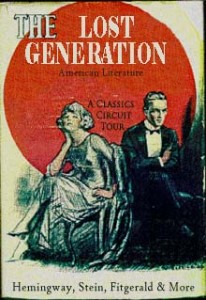
Coming up a bit sooner in the future is the Lost Generation Classics Circuit tour. This exciting tour will follow authors who lived during WWI and the "Roarin' 20's," authors like Gertrude Stein, F. Scott Fitzgerald, and Ernest Hemingway. On March 26 I will write a post about Hemingway's The Old Man and the Sea. Be sure to follow along with the rest of the tour as well - it runs from March 21 - April 3.
Subscribe to:
Posts (Atom)