Showing posts with label 2. Show all posts

Mini-Reviews: Young Adult Contemporary

Wednesday, May 29, 2013

Sweethearts by Sara Zarr


I don't know about you, but that cover definitely made me think I was in for a fluffy, romantic read. NOPE (read in Chuck Testa's voice) (you're my favorite if you got that reference).Sweethearts is about Jennifer, who used to be fat and almost friendless. Now she goes by Jenna and is popular and thin, but can't forget about the one friend that she did have back in the days of Jennifer, who disappeared after a traumatic experience that is alluded to in pieces throughout the book. When her friend re-enters her life, it causes Jenna to re-evaluate her priorities. It sounds like it could still be that fluffy, romantic read. However, it is not. Everything is awkward, and the entire premise for the book seemed implausible. I couldn't understand many of the characters' motivations. And the end of the book left me dissatisfied and with that slightly gross, off feeling you get about five o'clock when you've had a long day. Anyway, not my favorite. I will say that it was fun reading a book set in a place that I have lived -- I am a sucker for that.

2 stars

Warnings: Language, child abuse

How to Save a Life by Sara Zarr


I did have a more positive experience with How to Save a Life. In this book, a teenage girl's mother decides to adopt a baby after the death of the girl's father. However, she goes about it in an unorthodox way, finding a pregnant girl on a website and inviting her to live with them for a few weeks until the baby is born. The girl, Mandy, naturally has a few secrets of her own. 

I think the premise of How to Save a Life is as implausible as Sweethearts, but for some reason I could relate much more to this read, perhaps because of my recent pregnancy and childbirth experience. The characters were initially unlikable, displaying their flaws long before their redeeming qualities emerged, but by the end of the story I felt invested in them. Sara Zarr is also an excellent writer, and I think because I enjoyed this book as a whole more than Sweethearts I was able to appreciate her writing more as well. I also loved that the bookstore where Jill worked was called Margins. Ahem, could it possibly be Borders she was mimicking? I used to work at Borders and I felt like I was reading pages from my own life. 

3.75 stars

Warnings: Language, child abuse, some mostly off-page sensuality

 Second Helpings by Megan McCafferty

For some reason I can't get this picture to load, so I apologize for the lack of cover-age. Second Helpings is the second book in the Jessica Darling series. We were left with Jess's rage at Marcus Flutie in the last book. Now, Jess is doing things differently -- choosing different friends, different extracurriculars, and even finding a boyfriend -- one who is not Marcus Flutie. She is trying to choose a college as well. 

I have had mixed feelings so far about the Jessica Darling books. There are many elements of the books that bother me, such as the negativity and some of the gratuitous innuendo. At the same time, I love the openness and snarkiness of Jessica Darling's voice. She is stressed out and over-analytical, and it is something I can relate to so much. I keep going back and forth on whether I'd like to finish the series. I probably will read the next book, but I'm not sure how far I will go. 

3 stars

Warnings: Language, innuendo, off-the-page sensuality

The Reece Malcolm List by Amy Spalding


Okay, I'm just going to come out with it -- this is possibly my favorite contemporary YA novel ever. Ever ever. The premise is that Devan, who was raised by her father and (evil) stepmother, has never met her mother. All she knows is that she is an author named Reece Malcolm who lives in California. That is, until her father passes away and the evil stepmother doesn't want to be responsible for her anymore. Devan winds up moving to California to live with her mother. As she adjusts to her new life, she learns more about herself and her family.

I think what really made this book memorable was the characters. They all had so much dimension -- no one was perfect, everyone had their little quirks and annoying personality traits as well as their redeeming qualities. Every character felt so real and so genuine. The details of Devan's life also seemed so realistic to me -- I felt as if I was existing in her interesting little world. I loved reading about her performing, Reece Malcolm's messy and eccentric writerly life, the shopping and dinner dates Devan and Reece had together. Even though this is a contemporary book, I was completely transported into Devan's story while I read. This book was fun, with its share of drama and romance, but it also struck deeper chords, exploring the bonds between mother and daughter and the definition of what family really means. Definitely read it. Now.

4.5 stars

Warnings: Language, discussion of sex (not at all graphic)

A Smattering of Regency Romances

Thursday, February 14, 2013

Because it is Valentine's Day, I thought mini-reviews of some of the Regency romances I've read in the last few months would be appropriate.

Mr. Darcy's Diary by Amanda Grange

A long time ago -- a couple of years or so -- there was a promotion in honor of Jane Austen where there were eight spin-offs of Pride and Prejudice free for Kindle. I snapped them all up and never looked at them again, until recently, shortly after having my baby, I decided I needed something mindless to read, and Mr. Darcy's Diary seemed to fit the bill. And, well, it did. While there was nothing wrong with the writing or the story itself, it just didn't entertain me. It was watered-down Pride and Prejudice without Jane Austen's stunning writing, from a slightly different point of view. I would rather have just reread Pride and Prejudice. 

2 stars

Warnings: None

The Missing Manuscript of Jane Austen by Syrie James

I saw The Missing Manuscript of Jane Austen on NetGalley last year and eagerly snapped it up. I hadn't read anything else by Syrie James, but I'd heard good things about her, and was intrigued by the premise of the story. I hadn't realized that the book would actually contain the full alleged missing manuscript, but it turned out to be my favorite part of the book. To be perfectly honest, the first forty or so pages bothered me, and I was considering DNFing the book, but once the story moved past the frame story and into the missing manuscript itself, I was swept up and really loved it. I think it is ambitious of the author to try and recreate an entire manuscript worthy of Jane Austen (although the manuscript is repeatedly qualified as being an early, unpolished attempt by Austen), but I was pleasantly surprised at how well she accomplished her aim. Despite a rocky beginning, I found The Missing Manuscript of Jane Austen to be an entertaining and rewarding read.

3.75 stars

Warnings: Language, mild innuendo

Edenbrooke by Julianne Donaldson

My mom brought Edenbrooke with her when she came to help me after I had the baby, and for most of the first week she was urging me to read it. I kept putting it off -- I was in the middle of two other books that I wasn't enjoying that much, but I felt like I needed to finish them. Once I finally settled down to reading Edenbrooke, I was sad that I had waited so long. Set in Regency-era England, Edenbrooke is the story of two sisters and the pursuit of a young and charming heir. The story was absolutely charming. I loved the slowly building romance, which constantly made me giggle with giddiness. I finished the book with a feeling of contentment and a sigh. It is a perfect book for Valentine's Day and will also please those who love Jane Austen for the romance of her novels.

4 stars

Warnings: None

A Lady Cyclist's Guide to Kashgar by Suzanne Joinson

Wednesday, September 26, 2012

Title: A Lady Cyclist's Guide to Kashgar
Author: Suzanne Joinson
Genre: Literary fiction, contemporary fiction, historical fiction
Publisher: Bloomsbury USA, 2012
Source: NetGalley
Read for: Review

Eva and her sister Lizzie have joined the persuasive Millicent as missionaries to Kashgar, although Eva's actual motives are less than honorable -- she intends to write a book about her experience going through Asia on her bicycle. Kashgar proves to be more perilous than expected, leading to tragedy for all three women, and a new outlook on life for Eva. In a second narrative, Frieda, the daughter of a New Age mystic who deserted her at the age of seven, receives a mysterious call alerting her that a woman named Irene Guy has died and listed Frieda as her next of kin. Pulling with her a displaced immigrant running from the police, Frieda seeks to unravel the mystery of her connection to Irene Guy.

A Lady Cyclist's Guide to Kashgar had some interesting elements. However, in the end they did not unite well, and I was ultimately dissatisfied with this read.

For me the book was disjointed; there were too many different elements pulling in different directions and they never seemed to align. There was no cohesive theme or element to pull together the two narratives -- while the connection is revealed by the end of the book, the reason the two stories were told together seemed shaky at best. I felt as if the author was trying too hard to integrate mysterious, unique, and at times grotesque details when a little restraint would have given a stronger impression. When too much is thrown in at once, the story ceases to be believable.

I also felt that the historical narrative's background was obscure enough to warrant a little background. From what I could discern from the narrative, the women were in Kashgar, which is part of China but mainly inhabited by Muslims. In the book there was a great deal of mistrust aimed at the missionaries, as well as rebellions and civil unrest. The author puts these scenes in motion, but I was frustrated by the fact that I didn't know anything about the situation except that there was unrest and that the people seemed offended at the religious pamphlets the missionary women were distributing. I appreciate a book that doesn't lay everything out for the reader, but in this case I think more information would have made the book a more interesting and a more comprehensible story.

I will say that the writing was well-done for the most part, with poetic images and vivid language.  Many of the images were vibrant in my mind, especially scenes with Tayeb, the immigrant who befriends and helps Frieda solve the mystery of Irene Guy's past. However, there were a few instances when the writing was a little overwrought for the dialogue. For example, there is a scene  where Frieda is flashing back to the age of seven, where she says several things that just did not seem natural coming from a seven-year-old. (It is bad form that I haven't quoted it -- while trying to sort the book into my "Read" folder on my Kindle I accidentally deleted the scene I had highlighted). However, for the most part the writing was lush and kept me reading even though the plot was not coming together for me in a satisfying way.

Ultimately, A Lady Cyclist's Guide to Kashgar fell flat for me. Beautiful images and well-constructed sentences were not enough to pull the story together.

2 stars

Warnings: Brief strong language, disturbing images, violence, brief scene of sensuality

YA Friday: Struck by Jennifer Bosworth

Friday, August 24, 2012

Title: Struck
Author: Jennifer Bosworth
Genre: YA, post-apocalyptic, science fiction
Publisher: Farrar, Strous, and Giraux, 2012
Source: Library
Read for: Fun

Mia Price is a lightning addict -- the more she is struck, the more she craves the feeling. However, when strange events begin to happen around her, her family moves to Los Angeles, a place where lightning only rarely strikes. Unfortunately, this leads them straight into the path of a devastating earthquake. Now, two different cults are vying for Mia's attention and the power they believe she holds, a mysterious (and cute) stranger is following her around, and her body is sensing that there is a storm in the air.

I had high hopes for Struck. I'd heard great things about the book. I was also excited to read a book set in Los Angeles, where I will be moving in a few days (eep!). Meeting Jennifer Bosworth at Fierce Reads further made me excited to read this book. However, Struck did not pull together for me, and I was disappointed in the novel.

The one thing that is done superbly in this novel is the atmosphere. From the opening pages, there is a sense of anticipation and stress. Food is scarce after the earthquake. Violence is rampant. Mia's mother is experiencing some kind of post-traumatic stress experience that needs to be medically treated, meaning that Mia has to find medication for her on the black market. All the tension and anticipation was present at the beginning of the book, and I felt that my expectations were going to be delivered.

However, shortly after this, Mia meets a boy named Jeremy -- a boy that seems strangely familiar and that seems to be popping up everywhere. Cue the insta-love. Mia and Jeremy have a number of bizarre experiences that seem to link them together, and she describes his physical attractiveness, but the suddenness of their relationship seemed forced and shallow to me. By the end of the book, it seemed to take center-stage in the story. This seemed out of place because so much of the book focused on the apocalyptic events and the different forces pulling on Mia -- and those elements were much more interesting and believable. Basically, the romance left me unconvinced and lukewarm.

I was also disappointed in the interplay between the two cults. The two religions are essentially direct counterpoints of each other -- one dresses all in white, the other all in black; one professes to follow the will of God while the other uses more occult practices such as Tarot cards. For much of the book, they both seem evil, or at the very least not having pure intentions to work with Mia. The fact that these two groups were in opposition and fighting over Mia was believable. However, at the very end (this could be seen as a vague SPOILER so read with caution), one of the groups was suddenly shown to be "the good guys." This didn't seem believable to me because it was added onto the end almost like an afterthought. The "good" group wasn't gradually shown as more than what they seemed; they were just suddenly proven to not be evil.

I also struggled with the pacing. At the beginning, as I mentioned before, everything was tight and tense. However, portions of the middle of the book were loose and slow moving, meandering through plot points that seemed insignificant or drawn out. I think if plot events had been more tightly connected, the story would have played out more smoothly, despite the other flaws.

The book just didn't feel cohesive to me. The premise was interesting and the beginning was promising, but for me, Struck did not deliver.

2 stars

Warnings: some violence, thematic situations, language, mild sexuality

Death Comes to Pemberley by P.D. James

Monday, August 06, 2012

Title: Death Comes to Pemberley
Author: P.D. James
Genre: Historical fiction, mystery, spin-off
Publisher: Knopf, 2011
Source: Library
Read for: Fun

It is the evening before the Darcy's annual ball in honor of Mr. Darcy's mother, Anne. Everything is going well, with the Bingleys in the house for a visit and a potential romance in the air for Georgiana -- until someone rides into the estate shouting about gunshots and a wounded man. The main suspect is none other than Darcy's enemy and brother-in-law, Wickham. As the case goes to trial, the question is raised -- who is the murderer, and will the Darcys' reputations forever be besmirched?

I was pretty excited to read Death Comes to Pemberley. Regular readers of this blog know that I really enjoy spin-offs (to an extent -- you won't see a review of 50 Shades of Grey here), as well as Jane Austen. I've actually never read anything that goes beyond the story of Pride and Prejudice -- I've read books with the plot in other settings and time periods, but never any sequels or prequels. I was excited to see what P.D. James would do with the beloved characters created by Jane Austen. However, I found Death Comes to Pemberley to be a weak and slow-paced novel.

The first issue I had was the pacing. The descriptions were interminable and plodding. I enjoy many books that are slowly paced -- I like Jane Austen and the subtleties that exist in the books that she has written. However, the mimicry of her style did not work when not paired with her genius. I think P.D. James did well in imitating the style of Jane Austen, but the content was not up to par, which resulted in a pace that was far too slow.

I also took issue with the characterization. I didn't want to fall into the trap of disliking the story just because the characters were not exactly how I would picture Jane Austen's beloved cast of Pride and Prejudice -- but I must say I didn't think the way they were portrayed was how Jane Austen would have cast them. Elizabeth was mainly in the background, and frankly discusses the fact that Darcy's money was a primary motivation in her marriage to Darcy. She also bemoans the fact that they didn't have a romantic courtship. Really? I appreciate that perhaps P.D. James was trying to do something unique, but I thought these deviations were not in character with the original characters.

I did think the mystery was interesting, although somewhat predictable. I don't read many mysteries, because I think it is hard to find a good balance between a solution that is completely obscure and one that is too predictable, but I think Death Comes to Pemberley did fairly well with this. I also thought that, while some of the characters were not consistent with their inspirations from Pride and Prejudice, Wickham's future was very believable and consistent with his original character. I thought James was insightful into his personality. I also enjoyed the little connections to Jane Austen's other works. I'd never before considered the idea that Austen's characters were contemporaries in different parts of England and that they could have had acquaintances in common.

Overall, while Death Comes to Pemberley had an intriguing premise, the execution was lacking for me. It is clear that P.D. James is a talented writer, but this novel was a miss for me.

2 stars

Warnings: Some violence, talk of affairs

YA Friday: New Girl by Paige Harbison

Friday, January 27, 2012

Title: New Girl
Author: Paige Harbison
Genre: YA, contemporary, spin-off
Publisher: Harlequin Teen, 2012
Source: NetGalley
Read for: Review

Becca Normandy queened over the other students at her boarding school, Manderley -- especially the male students. However, she mysteriously disappeared one night and now she has been replaced by a new girl (henceforth referred to as NG). NG has the same roommate, the slightly disturbed Dana Veers, the same bedroom, and for whatever reason, people think she is trying to copy Becca. Matters get more complicated when Becca's boyfriend, Max, shows an interest in her. The pressure and the tension in the school are driving NG insane, while the mystery of what happened to Becca continues to hover over the school.

At the beginning of this modern retelling of Rebecca by Daphne du Maurier, I had many doubts. For some reason, I had the perception that it would be silly, trivializing the story I loved. I was wrong about that -- New Girl was just as dark as Rebecca and considerably more graphic. However, while it wasn't the silly story I feared, it didn't quite click with me.

New Girl did have some great elements, however. I thought the way Harbison integrated elements of Rebecca was clever. She hit several points, both large and trivial -- NG dreamed of Manderley after seeing it in a book, just like Mrs. DeWinter dreamed of it after seeing it on a postcard. NG was good at art. She had a dog named Jasper (although this dog was always NG's, not Max's, and it stayed home when she went to boarding school). And of course, there was Dana Veers, aka Mrs. Danvers, and her obsessive love for Becca/Rebecca, symbolized by the way she keeps Becca's sheets on the bed and won't take down any of her pictures.

There was also more character development and exploration in New Girl, giving some new perspectives on the characters. Johnny isn't a pervert trying to steal Becca away; he is a good guy, conflicted, but always nice to those around him. NG starts out as a passive person afraid of others' opinions, but by the end of the book she grows into herself, learning to ignore criticism and live her own life. Dana Veers is disturbed and pushed to the edge more than once, but we get perspectives into her past that help us understand why she is the way she is.

However, certain aspects of the characters' behavior didn't make sense to me, and as they were important plot points, the story fell rather flat. For example, Max's attraction to Becca seemed completely implausible. In Rebecca, there were clear motives for Maxim and Rebecca to be together. In New Girl, they were not clear; the only reason I could really glean from Max's vague allusions to her was that she was hot and he was drawn in. Also, the whole reason NG went to Manderley was too cheesy for my taste; she wanted to go to boarding school because she loved the Harry Potter books, forgot about the dream, and then was whisked away when a spot opened her senior year.

Another thing that bothered me was the writing. While there weren't many grammatical errors, the style was superficial and at times rather flat. The tone of the book was also immature, and this is definitely not a YA book that should be aimed toward younger teens. It deals with some serious issues, like rape, casual sex, and teen pregnancy, but the writing seemed superficial compared with the heavy subject matter. And the issues were rather overwrought for me as well -- I definitely preferred the subtlety of Rebecca.

My experience of New Girl was mixed. While I think the idea was interesting and certain parallels were well done, in general the writing and some of the plot events were too contrived. While it is interesting due to its connection with Rebecca, it isn't a book I'd recommend unless you are a die-hard Rebecca fan.

2 stars

Warnings: Descriptions of hooking up, discussion of rape

Love and Friendship by Jane Austen

Wednesday, January 18, 2012

Title: Love and Friendship
Author: Jane Austen
Genre: Classic
Written: Roughly 1790 (Wikipedia is blocked out courtesy of the SOPA boycott -- what's a girl to do?)
Source: Personal copy
Read for: Advent with Austen

This is a little (in my case, electronic) packet of juvenile writings by Jane Austen. My copy was comprised of "Love and Friendship," "An Unfinished Novel in Letters," "The History of England," and "A Collection of Letters."

"Love and Friendship" was an epistolary tale of star-crossed love. All of the letters were maudlin and mawkish, at times so ridiculous I couldn't tell if they were meant humorously or in deadly seriousness. They called to mind an episode from the Anne of Green Gables books, when Anne and her friends form a story-making club and write tales so pathetic and sentimental that they are all in tears when they read them to each other, and are rendered completely baffled when their more mature confidantes are reduced to helpless laughter. At every turn, the two heroines face loss of love, mysterious run-ins with estranged family members, and numerous grammatical and spelling errors. At first I was in severe pain from the story, but somehow in the process things took on such a ridiculous turn that I found it completely entertaining.

"An Unfinished Novel in Letters" shows a bit more of the sophistication and wit that Austen found in her novels. While it certainly had its silly moments, it seemed as if these were intentional, a game of playing with the ridiculous, awkward characters like Mr. Collins and Mrs. Bennett that populate the pages of more developed works. It wasn't as dramatic, and hence not nearly as entertaining as "Love and Friendship," but I enjoyed this work in that it showed Austen's genius in embryo. Here is a little sample for you that made me laugh -
We are handsome my dear Charlotte, very handsome and the greatest of our Perfections is, that we are entirely insensible of them ourselves. 
All I really recollect from "A History of England" is that, for whatever reason, Jane Austen really, really hated Queen Elizabeth. I am not knowledgeable enough about her life to understand the reasons why, but it is filed away in my mental cabinet to compare notes with once I do know something.

As for the other assorted letters and pieces, they were all very short and disconnected and simply showed more elements of the same -- some were exceedingly dramatic while others were playing with wit and manners.

This is a mixed bag -- it is mostly interesting only in that it is a piece of a beloved author that we have only in limited amounts, but it does have a few moments that are enjoyable for their own sake. If you are a fan of Jane Austen, you will probably read this at some point; if not, I probably wouldn't come here.

2 stars based on readability and narrative enjoyment alone; obviously the author connection is worth more than that.

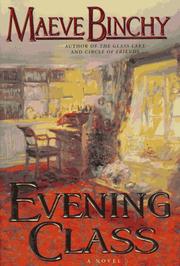
Evening Class by Maeve Binchy

Thursday, January 05, 2012

Title: Evening Class
Author: Maeve Binchy
Genre: Contemporary fiction, cozy read
Publisher: Dell, 1998
Source: Library
Read for: Fun

Aidan Dunne's life is lacking in color. His wife is emotionally absent and he fears that his long-awaited promotion to school principal is not going to happen. He tries to fill the empty spaces in his life by decorating a beautiful study with scenes of Italy, but he doesn't really find fulfillment until his plan for evening classes for adults is approved and the eccentric and mysterious Signora begins teaching an Italian class. The Italian class comes together and affects the lives of its participants as they learn to overcome the boredom of day-to-day life with a little enchantment.

I really looked forward to this first Binchy read. All last month, I was craving "cozy reads" -- books that took place in cold climates and involved tea, sweaters, and feel-good messages. The added element of Italian further attracted me, as my husband is an Italian teacher himself (I don't speak the language yet, but I am hoping to work on it when I am out of school). I feel like this book had a lot of promise, but ultimately it didn't come through for me.

I will say that the plot was mildly entertaining. I was curious to know what would happen to the characters; they were in some interesting situations and I wanted to know how they would get out of them. However, I feel as if they frequently copped out of their problems. For example (a spoiler follows), one of the characters, Lou, is involved in a crime ring in which he is required to do certain favors for a boss, such as leaving a door unlocked, storing drugs, etc. He mentions at one time that he doesn't want to be involved any more, and the boss tells him there is no getting out of the situation: now that he is involved, he will always be involved. However, when Lou sees another member of the crime ring fail to complete his duty and mentions it to the boss, the boss says, shaking his head sadly, "He won't be working anymore." Lou took this to mean that he was simply uninvolved. I took it to mean that the unfortunate guy had been killed for not doing his job. However, Lou decides he just won't work anymore either. I kept expecting the crime boss to come after him, but he never did. And okay, I'm glad nothing bad happened to Lou, but it seemed extremely unlikely to me. Other characters' situations resolved in similar ways. When characters were unfaithful to each other, their partners were conveniently also unfaithful, and the relationship was more or less amicably ended. People with bad habits simply changed their ways. It just seemed too easy and too convenient.

The writing also left something to be desired. It wasn't horrible, by any means; it is quick and easy to read. But I wasn't impressed. Binchy simply wrote what she saw; there was nothing elegant or unique about the writing. I know that this is often the case with mass market books, but when I read Winter Solstice, a book that I would class similarly, the writing was comfortable but also lovely and elegant.

I haven't given up on Binchy yet, but I was disappointed with this read; I expected more. It gives an interesting story, but the problems are solved too easily and conveniently to hold a lasting interest.

2 stars

Warnings: some swearing, lots of infidelity (not described past the bedroom door)

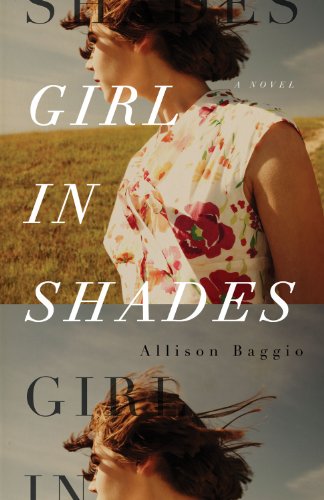
Girl in Shades by Allison Baggio

Saturday, October 01, 2011

Title: Girl in Shades
Author: Allison Baggio
Genre: Contemporary fiction, magical realism
Publisher: Ecw Press, 2011
Source: NetGalley
Read for: Review

Maya Devine's life is complicated. At 11, she is able to see colors around people's heads, and sometimes even hear their thoughts. Add to this the fact that her mother is dying of cancer, refuses to accept medical treatment, and is being hailed as a prophet in her dirty teepee in their yard. Maya has to find a way to feel peace, a task that is difficult for any adolescent, not one with all the complications she is experiencing. This book follows Maya on a path to self-discovery through the catalyst of her mother's illness.

This book sounded so intriguing to me. Lately I've been seeking out books about characters with cancer because I want to work in the oncology field and want to understand all the different emotions and experiences that go along with that diagnosis as much as anyone outside the situation possibly can. The added fact that Maya has some sort of supernatural ability further increased my interest - my few experiences with magical realism have been very positive and I've been wanting to branch out and read more books. I was excited to delve into Maya's world and learn what happens. While the story was an interesting one, overall it feel flat for me.

I think the main reason for my reaction is the disconnectedness of the different events in Maya's life. At first, I thought this was a story about her strange mental abilities. Then I thought it was a story about her mother's cancer. It then shifts into a story about the relationship between Maya and her father, and finishes up with a journey into India to meditate and learn more about her past. There are connections between all of these events. They lead to each other (in ways I can't describe, because it would give away the book's plot twists) but they still felt essentially separate to me. Even though I knew why certain things were occurring, I felt like I was on a bizarre journey, trying to find the meaning behind everything. And the meaning does eventually get revealed, but I'm not sure if it is enough to make up for the disconnect.

The disconnect was not only present in the plot, but also in my ability to relate to the characters. I pitied Maya. I was sad that she had such a difficult life, that so many people turned against her when she needed them most. However, I never liked her. Her constant battle seems to be pleasing the people around her (an obviously impossible task) and even when she does finally take a journey to discover more about her past and get some closure, it is at the prodding of family. She wasn't a horrible character. There was nothing to hate about her. However, there was also nothing to love. A character I feel neutral about usually leads me to feeling pretty neutral about the story as well.

Don't get me wrong - this isn't a bad book. It wasn't torturous to read. The writing is fine. The characters are fine. The plot is full of strange and bizarre things that could have been fascinating, but instead were mildly interesting for me. While Girl in Shades had potential, in the end, it wasn't the book for me.

2 stars

Warnings: some swearing, one "scene," some intense thematic elements

YA Friday: Abandon by Meg Cabot

Friday, August 05, 2011


Title: Abandon
Author: Meg Cabot
Genre: YA, Paranormal
Publisher: Point, 2011
Source: Library (Audio book)

Pierce Oliveira's life is a little dysfunctional right now. She was legally dead for a few minutes after drowning. During those few minutes, she met a dark and mysterious stranger that now won't leave her alone and has gotten her into serious trouble. Pierce and her mother have moved to her mother's childhood hometown, Isla Huesos, in an attempt to make "a new start" (a phrase you will see about 389 times in the book), but what they don't realize is that they've walked right into a new danger.

Let me preface this by saying that I love Meg Cabot. Princess Diaries? Yes, please. I am working my way through the last half of the series after discovering that there are ten books (plus several novellas). I devoured her historical fiction romance, Victoria and the Rogue. One of my roommates gave me a much loved copy of Avalon High for Christmas. I was gushing over Teen Idol for weeks. So it's not as if I don't like her style.

But.

It didn't work for me in Abandon. I'm not sure why. My favorite Meg Cabot heroine, Princess Mia, is whiny, neurotic, and overly-obsessed with caring for animals just like Pierce. With Mia, it is endearing. With Pierce, it wasn't. I think this may partly be a result of the overall tone of the story. All the other Meg Cabot books I've read have been light-hearted, humorous, and fluffily romantic. This is a loose retelling of the Persephone myth, so it's going to be dark. But Pierce continually referred to her self-imposed social isolation as a coffin and referenced death images. I know, I know, she is dating Hades (okay, not exactly - if you read the book you will understand what I mean), but must she reference the blackness and evil and death she sees so very often?

I also wasn't exceptionally impressed with the supporting characters. Pierce's grandmother is creepy and her actions are too out there to be considered realistic, even when you take into account some of the little secrets that come out at the end of the book. Pierce's new friend Kayla calls her "Chickie" instead of by her name (need I say more?). The cemetery sexton goes back and forth between being a benevolent gentleman with some strange hobbies to a nasty control freak. John, the love interest, is controlling and self-absorbed.

With that said, I was interested in the story, enough that I might read the rest of the books just to find out what happens next. The mythology component was interesting and kept the book from falling too flat on its face - instead it just tripped and dropped its books in the hall, bruising its knees but not inflicting any lasting damage. The book was still entertaining and interested me enough to keep me invested, but my expectations for the remaining books aren't too high.

2 stars

AfterWord edited by Dale Salwak

Sunday, May 01, 2011

Title: AfterWord: Conjuring the Literary Dead
Author: Various - edited by Dale Salwak
Genre: Nonfiction, essay
Publisher: University of Iowa Press, 2011
Source: NetGalley

The idea of this book is to answer the question of what one would say to one's favorite authors and what questions they would ask. The book contains essays answering this question in various forms, from the author traveling back in time to ask the author a question, encountering the author in a more spiritual, afterlife form, or simply speculating on what that answer would have been based on the author's life work.

I requested the book because I thought the question sounded fascinating, although it is a question I have never been able to answer myself. Part of the delight in reading for me has been to wonder about the person behind the story - their motivations, their personalities, and the experiences that resulted in their desire to tell their particular tale. For me this is generally speculation - I am not one to read many biographies or do extensive research. The most important part is the story itself. But I do sometimes wonder about the individuals behind the stories, and hoped this book would give me glimpses of those individuals.

In some ways, the book was successful in this. I was given personal glimpses into the authors' ideas of their selected interviewee's lives, and learned a few isolated facts about some of the authors. However, I think in general to truly enjoy this book you need a fairly comprehensive previous understanding of the lives of the authors mentioned. Several times I found myself lost because I'd never read the work of or perhaps even heard of the author described in a particular essay. Many of these essays were written by people who had written theses or even books on their author of choice, meaning that their questions were specific and occasionally irrelevant to the casual reader like myself.

I did enjoy the creativity with which the contributors imagined their authors' settings and responses. In many scenes I was able to picture the author in their setting. I particularly enjoyed the essay on George Gissing (who, I should mention, I have never read) when he is brought by his friend H.G. Wells to the present for a few days to protect him from something in his normal time frame. Gissing's reactions to modern customs and innovations were humorous and believable. However, at times the conversations between the interviewer and interviewee were very stilted. The interviewer would go on for a page or two about what they already know about the author and then ask the question. It made the scenes seem false and constructed.

Honestly, this book's saving grace was, for me, the initial essay by Margaret Atwood on the nature of death and why writing is a reaction against death. This essay was not written for the book but a reprint used as a sort of introduction to the subject matter. Atwood's exploration of human rituals surrounding death and description of writing as a way to keep ourselves immortal was thought-provoking and apt. The rest of the book did not measure up to the strength of writing or depth of interest of the first essay for me.

If you are a literature student or heavily interested in literary history and the lives of authors, you may get something from this book. For me, while there were a few poignant quotes and well-rendered scenes, this book fell a little short of the mark. I learned a few things that sparked my interest, but in general I was just excited to be finished.

2 stars

YA Friday: Bumped by Megan McCafferty

Friday, April 22, 2011

Title: Bumped
Author: Megan McCafferty
Genre: YA, dystopian
Publisher: Balzer & Bray, 2011
Source: Received from NetGalley

Bumped explores a world where over 75% of the human race is infertile after the age of eighteen thanks to a progressive virus. As a result, teen pregnancy is not an epidemic that needs to be stopped but a condition that is embraced and rewarded. Melody Mayflower is a genetically desirable teen waiting to sign her first "bumping" contract in order to provide a couple with a child. However, her plans are shaken when her twin sister, Harmony, appears from the doctrine-heavy community of Goodside, where they preach the wickedness of bumping for profit and encourage families and marriage. Harmony and Melody's opinions and goals are very different, but as they get to know each other, they start to question the societies in which they were raised.

This was an interesting read for me. I went into it knowing that I had the potential to be offended due to the scandalous subject material. However, what was offensive to me was not so much the cavalier attitude about sex - although that was present to a degree - but the way Christians (described in the book as "having God") were presented. They were presented as ignorant, blindly following their beliefs and forcing individuals into loveless marriages. This is a satire, and I know that both the abstaining viewpoint of Goodside and the let-it-all-go-wild viewpoint of the bumpers-for-profit were brought to extremes to illustrate a point. However, I didn't love the underlying message that people who wait until marriage also walk around in floor-length dresses wearing veils and gloves so their skin isn't sullied by the unclean eyes of unbelievers.

End of rant. Other than the fact that I felt like Christians were being mocked a little in this book, a few other issues bothered me. First of all, I felt that the characters were a bit shallow. While both Melody and Harmony undergo personal changes that lead them to question their respective lifestyles, these changes seemed to be superficial. They begin questioning the institutions after sudden, dramatic events in their lives, and it seemed unrealistic to me that they would have such drastic alterations in their belief systems, especially Melody. While Melody is a little nervous about the idea of bumping, she seems pretty convinced of the idea - light-heartedly jealous of "Ventura Vida's adorable six-month bump," excited about the prospect of being admired and rich. Harmony is more introspective throughout the book, but the change in her seems to come mainly from physical attraction to a man. Is that really a message we want to send to teens - change your standards so you can get a guy?

I also didn't love the ending. I know that trilogies end on a cliffhanger so we will all be desperate to buy the next book. I know it's good salesmanship and profitable. But everything happened so quickly in the end of the book that it seemed too obvious that McCafferty was trying to ensnare our attention for the next book. Everything is left hanging, and everything happens too quickly to process. I know, I know, I like my loose ends tied up. I know I can't expect that in the first book of a trilogy. But if at least a few of the ends were tied, the ending would have been less jarring and the book would have felt more complete.

Now that I've aired my grievances, there were also a few aspects of the book that I enjoyed. The plot was entertaining and I wanted to keep going to find out what happened to the twins. I also think the idea to turn on the head a generally accepted position of society - that teenage pregnancy, regardless of what you may think of premarital sexual activity, is not a good idea - was brave and interesting. I found the dichotomy between Goodside and the rest of the world to be interesting, and a good example of the proverb to be moderate in all things. Encouraging unbridled sexual activity to ensure the continuation of the human race resulted in many problems, especially exploitation. Rigidly controlling lives by enforcing stringent rules also resulted in a decreased quality of life and seclusion for many women. McCafferty does a good job of bringing both these situations to light. She doesn't present either group's ideas as truly viable - these are both corrupt societies. They are opposites of each other, so doing a one-eighty turn in philosophy isn't going to solve the problem.

So overall? This isn't an awful book. I was engaged. I wanted to know what happened next. I have a favorite quote. "Harmony really puts the fun in fundamentalism." A little cheesy, but it made me LOL - literally. Ha. But it did lack depth. It was written at the level of young YA readers, but the content was definitely adult. I also felt it was offensive toward Christians at times. I probably won't recommend this book to anyone, but I did feel that I gained some insight from it.

2 stars

The Alchemist

Monday, December 13, 2010

The Alchemist follows a boy from his humble beginnings as a shepherd through a mystical journey to discover his Personal Legend. Along the way, he experiences what at first seem to be distractions, but ultimately point him toward his ultimate goal.

I went into this book with mixed signals. The grocery store displays claimed it was "the epic journey that has captivated millions!" However, all the book reviews I read and the bloggers who noticed I was reading it seemed to absolutely hate it. This led me to think it was a "love it or hate it" kind of read, but in reality, I ended up being pretty ambivalent about the book. It had both negative and positive qualities, but they more or less canceled each other out in my mind.

My main complaint about this book is that it seemed disjointed, both stylistically and in the narrative. The book would seem like a fable, with stereotypical characters and an archetypal plot, and then suddenly, the boy would be acting like a punk teenager, annoyed with his teachers. That didn't fit in with the whole, "I'm going on a mythic journey symbolic of the human quest for joy" theme. I imagine Coelho was trying to make the character more believable and show the resistance people often have toward actually pursuing their goals, but it seemed out of place to me. I think the disjointed narrative may also have been Coelho's attempt to make the book seem true to life, so in some ways I appreciate it. It is true that when I think back on some of the things I have ended up doing, they seem pretty random - switching from a music major to neuroscience (with a few other random stops along the way)? Working with disabled people? Going to nursing school? While I love these things now, if you had told me about them when I was 15, I would have laughed in your face. So, yes, I agree that our lives and our "personal journeys" are disjointed. But in the setting, they felt a little jarring and out of place.

I did enjoy a few of the concepts in the book, however. I liked learning that muktab means "it is written." (A major phrase in one of my favorite movies, Slumdog Millionaire, and also the name of a character in the latest Alanna book I'm reading, which fits him perfectly. I never would have picked up on it otherwise!) I thought the love story was sweet. It was mainly when I was reading about the love story that I found some redeeming value in the book. And also - while the information wasn't presented in a way that wasn't especially meaningful to me, I do think it is important to "seek your Personal Legend" - except I call it seeking joy, and it isn't quite as absolutely defined a process as the one described in The Alchemist. If it was meant to be a self-help book, it failed me, because it didn't cause me to reevaluate or change anything in my life.

So, to sum up - I didn't love it. But it was ok. I should also mention (for my own sake probably more than anything else) this is the first book I have finished in the Birth Year Challenge hosted by Hotchpot Cafe. Only three weeks left - good thing I'm almost done with my second book.

Readability/accessibility - It was an easy read. Occasionally disjointed, as previously mentioned.
Aesthetics/literary merit - It had a few pretty passages, but in general, didn't work for me. 2
Plot: Pretty disjointed, drove me crazy. 1.5
Characters: Because this was a fable of sorts, they weren't really developed, but I was expecting that. 2
Personal Response: 3. Like I said, it was fine. I didn't hate it, and there were a few parts I liked.
Overall: 2

The Lost Symbol

Friday, November 26, 2010

I thought this was an interesting cover - I'd never seen it before. Anyway...

I listened to The Lost Symbol on CD, something I don't normally do. I have a horror of "missing something" and so I usually prefer to keep my stories in print. When I do listen on CD, I tend to push the back button multiple times in case I missed something. But my then-fiance was embarking on a 12 hour drive alone and I was worried about him staying awake, so I got him something to keep his eyes opened. Because I have an hour-both-ways drive every week, I decided to give this book a try.

The premise: Robert Langdon of the Micky Mouse watch and tweed jacket has been called to give a last minute lecture in Washington D.C. by his mentor, the eminent Mason Peter Solomon. When he arrives, he is thrust into an unexpected (but is it really? This is Dan Brown) quest to decipher clues to protect an ancient secret.

Honestly, with this book I got exactly what I expected. It followed the Dan Brown formula to a T. (To be fair, I haven't read any of his books that are not about Robert Langdon. Those may actually have a different plot). We have a mysterious villain, several puzzle pieces that could only be deciphered by a master of symbology (enter Langdon) and an intelligent woman to help him along the way. One thing I've noticed about the Langdon books that I appreciate is that there is always a huge wrenching twist at the end where you realize, this person is not who I thought they were! It's typical of Dan Brown (I can think of this exact twist in all three Langdon books, arriving at approximately the same point in each book) but it is still fun to realize you've been fooled. In some ways I got what I was looking for. My mind was entertained while I drove. The tension built up, and I was occasionally late as I waited a couple of minutes in the car once I got to my destination at the end of the hour commute.

However, (and I believe this is the main complaint with Brown's other books) outrageous claims are made that, instead of adding to the enjoyment of the mystery, weaken the credibility. The main thing I'm thinking about here is "breathable liquid." Also, the "noetic science" thing drove me up a wall a little as well. I'm not denying that the brain has untapped potential and that we don't know more than we do know. I don't believe that the mind is a simple manifestation of cortical firing. However, I don't know if I believe that the pineal gland is the seat of the mind. Kathryn Solomon describes a study where they study yogis' brains and note that the pineal gland secretes a waxy substance that somehow empowers them. I don't know if this is true. I would imagine that Dan Brown has really encountered this study - most of his "outrageous claims" do have some tie to the real world. But I don't know if the study itself is actually relevant. The idea of the pineal gland as the seat of interactions between spiritual mind and biological brain comes from Descartes, who believed that "animal spirits" directed the brain through the pineal gland. So it seems that the yogi-pineal gland connection is rooted in philosophy, not science. Anyway, I'll get off that neuro soapbox now.

One more thing before I end. While I was listening to this book, I ended up walking home from class behind a girl talking on her cell phone. She was talking about The Lost Symbol so I found myself listening. She started ranting about how she was so angry because everything built up to this climax and then there were twenty more pages at the end "that I like, didn't even read I was so mad." There is a lot more calm-down time at the end of The Lost Symbol than the other Langdon books, but I actually thought it was pretty interesting, although at times annoying (re: pineal gland discussion). So if you expect all action from Brown, bear in mind that this book is a little more contemplative than the other two Langdon books.

So, overall...
Accessibility/readability - It was very easy to follow and listen.
Aesthetics/literary merit - 2. It wasn't poorly written or anything (as far as I could tell from listening) but aesthetics was definitely not the point here.
Plot - 3. It was fine. It held my interest.
Characters - 1.5. There really isn't any character development here, although Brown does mark them with idiosyncrasies (my favorite is Langdon's Mickey Mouse watch). The .5 is because the villain is honestly a pretty good villain, even though he behaves in a too typical manner with no surprises.
Personal experience: 2.5. I got what I was looking for - a little entertainment on a boring drive. I probably wouldn't recommend this book unless you really love Dan Brown or need an easy read.
Overall: 2
Related Posts Plugin for WordPress, Blogger...