Showing posts with label Middlemarch. Show all posts

Recent Reads -- 4 stars each

Monday, September 29, 2014


My Life in Middlemarch by Rebecca Mead

I first read Middlemarch when I was in college. I'd picked it up because I knew it was one of the "greats" and I felt like I had to read it sometime or other; I didn't suspect how much engaging it would be. A few months ago, I started listening to it while I ran. Thus, when I had a chance to read an early copy of My Life in Middlemarch, I jumped at the chance. To be honest, I was expecting more of a memoir than this biography/criticism/personal reflection, but I still loved reading about the layers of George Eliot's life, the construction of the massive, masterful novel, and the way books color and influence every reader's life.

4 stars

Warnings: Some thematic material and vague references to sensuality


A Circle of Quiet by Madeleine L'Engle

I love Madeleine L'Engle. If, someday, I am a famous writer (I can dream, can't I?) and someone asks me who my greatest influence was, she will be at the top of the list. I actually read part of this memoir several years ago and I have no idea why I didn't finish it at the time, but several of the lines I highlighted have become so much a part of my own opinions that I had forgotten that I first read them in A Circle of Quiet. This memoir explores L'Engle's experiences with writing, living in a small community, spirituality, and family life. It is rambling but gorgeous, with many gems of wisdom. I am so excited that there are three more Crosswicks Journals for me to dive into.

4 stars

Warnings: A few instances of language, discussion of some heavy ideas
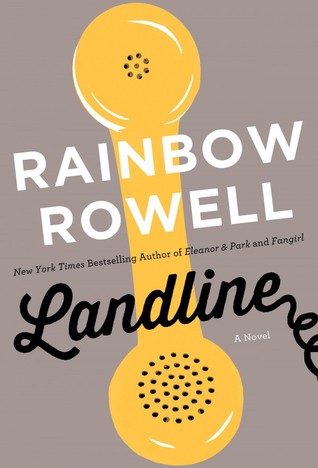


Landline by Rainbow Rowell

Rainbow Rowell is pure delight to read. Something about the way she frames emotions and experiences makes them both infinitely relatable and yet entertainingly unique. Landline is the story of Georgie McCool (which, really? what a name -- but it worked with the character once I got acquainted with her), a career woman and mother whose marriage is faltering. After she chooses work over family and her husband, Neil, takes their kids to see his family for Christmas without her, she tries to call them from her mother's landline -- only to find that it isn't present-day Neil but Neil from her past that answers. As she speaks with him, she evaluates her life, love, and relationship and tries to work her way back to her family. One of the things I loved about this book was that I could really empathize with Georgie in many ways. I am a working mother too -- I am going to have to be away from my family on Christmas too (although for me, it is not a choice, and my husband isn't mad at me about it, thank goodness). The pain she experienced reverberated with me, and as she went through the growing process I also felt like I learned some things about love. Rowell is an auto-read for me now.

4 stars

Warnings: Language, references to sex (no explicit scenes)
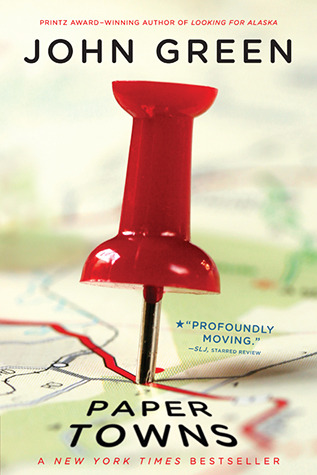


Paper Towns by John Green

I'm (very slowly) working my way through John Green's backlist. Paper Towns is about a guy whose name I've already forgotten whose childhood best friend goes missing -- but leaves some clues for him to find her. As he leaves on his wild goose chase he learns about love, friendship, and living. So here's the thing about John Green. Fault in Our Stars was amazing and moving. Looking for Alaska was pretty good, and unique from Fault in Our Stars. However, Paper Towns reads a lot like Looking for Alaska. Manic-pixie-dream-girl, much philosophizing about love, friendship, purpose, and death. It was a solidly good book, but definitely didn't veer from the prototype. I will say that I don't mind Green's hyper-intelligent protagonists, though -- I know people complain that teenagers don't talk like that or think like that and so on, but I disagree. Not all teenagers do. Maybe not even most. But some do, and I think they would definitely be the most interesting ones to read a book about. End of that rant. Basically, good book, good coming of age story, if you like John Green, here's a John Green book that sounds just like a John Green book.

4 stars

Warnings: Language, teen drug use and drinking, references to sexuality

Why I Read... Classics (part 1)

Thursday, September 22, 2011

In my mind, there are two denominations of a classic - the typical, traditional classic and the "modern classic." While I don't entirely agree with the term "modern classic" (to me, the term classic indicates the passage of some amount of time and the ability of a work to stand up to that passage of time), it is a genre that I enjoy, so for lack of a better term, I will continue to use it to classify that group of books.

However, for today, I would like to focus on, um, unmodern classics. Which for the purpose of this post, is defined as an old book (before 20th century) that has literary and aesthetic meaning and merit. 

Classics have almost always been a part of my literary diet. Hand in hand with my love of historical fiction, I grew up enjoying "old-fashioned" things. Even more old-fashioned than the stories written about the era after the fact are the stories written right in the thick of things. In elementary school I devoured every volume of the Great Illustrated Classics series that I could get my little hands on. I have no idea if this series is still in print, and unfortunately most of those books that I owned disappeared in a garage sale years ago, but I am definitely hoping that I have access to them once my children are at an age when they are an appropriate reading level. Those books introduced me to the classics and gave me a familiarity with the stories that allowed me to enjoy them later when the language got harder. (I also have to put in a little plug for Wishbone, which gave me that familiarity even earlier than the Great Illustrated Classics). 

My love of the classics in their unabridged form was ongoing throughout high school, interspersed with fantasy and sci fi, but it was intensified my senior year in AP English. Each semester, we were required to choose a classic and do a huge project on it, involving about 20 small 2 page papers and projects. The last two weeks of the semester, we all presented on our projects, aiming to give a familiarity with the canon to everyone in preparation for our AP lit test. I was lucky enough to have two very excellent books suggested to me (The Count of Monte Cristo and East of Eden) and discovered several more in the process of the presentation. Up until the last year or two, my reading was almost exclusively classics from that point. 

Anyway, I'm pontificating overmuch in this introduction. I guess to sum up, if you are even still reading, the classics are a huge part of my life. I love them.

Why I Read Classics

* Timelessness. The reason these stories have lasted is because they tell a story that appeals to many people, or explore a theme that is important across large groups of humanity. These aren't for specialized audiences - these are stories that have touched thousands and millions of people.
* Rich writing. This isn't present in every classic - sometimes the writing is thick rather than rich (now I feel like I'm talking about Yoplait). However, in general classics have beautiful, well-crafted, and sensorily appealing sentences.
* Complexity. Once again, not always the case, but many of the classics I love have many things going on, unfolding slowly over time. Love it. 
* The prestige factor. Mostly kidding. But it does lend a certain sense of pride to have finished some of the more difficult tomes. 

Recommendations

* Jane Eyre by Charlotte Bronte and Wuthering Heights by Emily Bronte - I love the Brontes. Haven't gotten acquainted with Anne yet, but I think that will also be a good experience. These Victorian slightly creepy romances are excellent autumn or winter reads and tell love stories that aren't as simple as love-at-first-sight-then-happily-ever-after. 
* Anne of Green Gables and just about everything else (excepting Jane of Lantern Hill, which I did not like) by L.M. Montgomery. These classics tell simpler stories, but I've never been able to get enough of them. They describe good, simple lives with romance, family, and personal development.
* The Count of Monte Cristo by Alexandre Dumas. Despite the 80-odd pages of history on the Napoleonic wars, this book has a powerful narrative with many intertwining plot lines. If the huge volume intimidates you, read the abridged version. It's better than nothing!
* Middlemarch by George Eliot. This isn't an easy book, but I was swept up by it. Give it a chance and skim the sections on local politics. 

For further recommendations, visit...

Dead White Guys. If you like your classics with a serving of snark, this will be your new home. 
Rebecca Reads.  Thoughtful reviews with a lot of depth. She also runs the Classics Circuit, another great resource for learning about classics in concentrated areas. 
A Room of One's Own - Jillian is one of the most passionate readers I know through the blogiverse. She is dedicatedly becoming well-read, tackling many challenging texts but also many children's classics. 
A Literary Odyssey - Allie is working through a 250-book long list of classics. She works through many of the classics that absolutely intimidate me (namely: the Greeks). Her reviews are personable and informative. 


Related Posts Plugin for WordPress, Blogger...