Showing posts with label R.I.P. Challenge. Show all posts

R.I.P. IX

Sunday, September 14, 2014

You guys! If you've been reading this blog for any length of time you know that I looooove Stainless Steel Dropping's R.I.P. challenge. Love it. I have been participating for four or five years now and I look forward every year to setting aside some atmospheric reads for the fall. Here's the general idea (from the original website):
September 1st is right around the corner. It is time to begin.
Mystery.
Suspense.
Thriller.
Dark Fantasy.
Gothic.
Horror.
Supernatural.
Or anything sufficiently moody that shares a kinship with the above.
That is what embodies the stories, written and visual, that we celebrate with the R.eaders I.mbibing P.eril event.
As time has wound on I’ve honed this event down to two simple rules:
1. Have fun reading (and watching).
2. Share that fun with others.
As I do each and every year, there are multiple levels of participation (Perils) that allow you to be a part of R.eaders I.mbibing P.eril without adding the burden of another commitment to your already busy lives. There is even a one book only option for those who feel that this sort of reading is not their cup of tea (or who have too many other commitments) but want to participate all the same.
R.I.P. IX officially runs from September 1st through October 31st. But lets go ahead and break the rules. Lets start today!!!


I'm planning on Peril the First, which is to read four books fitting into the categories of R.I.P. Here are the four I think I'll read:

* The Distant Hours by Kate Morton
* Thorn Jack by Katherine Harbour
* The Secret History by Donna Tartt
* The Tenant of Wildfell Hall by Anne Bronte

I am also planning on rereading the first two books in the Raven Boys series and, hopefully, Blue Lily, Lily Blue. I also want to listen to The Scarlet Letter by Nathaniel Hawthorne, which isn't supernatural, per se, but always feels very October to me.

Do you like to read books that fit in with the season? Any good suggestions for October? Comment below!

Coraline by Neil Gaiman

Tuesday, October 29, 2013

I have never seen this cover before, but it is creepy awesome, amirite?

I usually love scary stories. Picking out books for the R.I.P. challenge is something I look forward to each year. However, for some reason -- whether it be the fact that I am now a mother, or the fact that I care for kids every day for whom death is no joke -- I have had a hard time this year. I started The Diviners and Bellman and Black and could not get through them due to the dark, creep factor. However, Coraline, despite being satisfyingly scary, was just the right level to give me a good scare without disturbing me too much.

Coraline is about a little girl who has a pretty decent life that is pretty boring. She goes off in search of adventure and finds it -- but it leads to a lot of terror and responsibility to go through that terror to save lives. There is a big focus in the book on being brave -- on doing things you don't want to do that are necessary. I think that is part of the reason I loved Coraline -- I don't like books that are written purely to disturb. I like that there is a positive message at the bottom of the scary story.

I also loved the exquisite combination of beautiful writing and creepy, creepy pictures. This is the first Neil Gaiman I have read (I know, I know) and thus far, the hype is all warranted -- in fact, the next book I plan to pick up is also Neil Gaiman. The illustrations are also excellent for portraying the vivid images Gaiman creates with his words. I felt submersed in Coraline's creepy adventure, surrounded by the things that were haunting and frightening her.

Coraline was an excellent read for this Halloween, and I am glad that I finally picked up a Neil Gaiman novel. I may not be able to handle as much fright as I used to be, but it is good to know that there are some great ghost stories out there that aren't overly gory or dark.

4 stars

Warnings: Scary

Northanger Abbey by Jane Austen

Friday, October 04, 2013

Moment of silence for having completed my last Jane Austen novel. *Sigh*. I read Northanger Abbey for the Classics Club Spin and RIP VIII. I finished a day late, but still have been grateful for the added impetus to read it. I was expecting to be underwhelmed -- many people told it me it was their least favorite Austen, or, even worse, that they hadn't enjoyed it at all. I was expecting a boring read, but was instead completely delighted.

Northanger Abbey begins with Catherine Morland's visit to Bath. Catherine is the daughter of a very large family in a rural area who has seen very little of the world, and Bath brings many new opportunities. She meets a best friend, Isabella, and relishes the pleasure it brings her to have a confidante. She also finds herself in the attentions of two very different men -- Isabella's pushy, talkative brother, John, and a clergyman named Henry Tilney. Catherine's ideas of romance are very much influenced by the book Udolpho by Ann Radcliffe, and they color some of her experiences throughout the book.

One of my favorite things about Northanger Abbey was Jane Austen's unmitigated sarcasm. She constantly describes how Catherine is not a proper heroine, whether through being merely conventionally pretty (when she is having a good day) or through not jumping to the most dramatic of conclusions when her lover is late to call. Austen is clearly making fun of herself throughout the book. I also really loved the way Catherine's imagination runs away with her as she reads Udolpho -- and the way Henry eggs her on, planting ideas in her imagination that lead her to pass a few very freaked out nights in Northanger Abbey.

I also loved the relationship dynamic of the book. I don't know how many of my readers are familiar with Brigham Young University, where I received my first college degree, but it is known to those who have attended as a bit of a bizarre dating sphere. Everyone is looking for a spouse, deny it as they might  (and, I'll confess, I found mine there), and people wind up dating a variety of people, some of whom are dreamy, some of whom are, well, interesting. John Thorpe reminded me so much of a few people that I went on first dates with there -- refusing to take no for an answer, talking up his own accomplishments so incessantly that they cease to impress, leading others to think that you are in a serious relationship, etc. It brought back all the awkwardness and emphasized the humor.

I also liked that Northanger Abbey was short and light to read. It was just what I needed. While it lacks the sweeping romance of Pride and Prejudice, it is enjoyable and will bring a laugh. It also has just enough Gothic charm to fit well with the Halloween season. I recommend picking it up this October!

4 stars

Warnings: None

R.I.P. VIII

Monday, September 02, 2013

So, RIP VIII. Guys. I look forward to this all year, every year.


RIP is a reading challenge hosted by Stainless Steel Droppings celebrating all those spooky, fall-like stories -- mystery, suspense, thrillers, dark fantasy, gothic, horror, supernatural, and anything else that evokes those spooky feelings. 


I am going to participate in Peril the First, which is reading four books that fit the above categories. I have no idea how much time I am going to have to read because I am going back to work full time tomorrow (eek) but here are some of my ideas:

* Bellman and Black by Diane Setterfield
* The Night Circus by Erin Morgenstern (reread)
* Northanger Abbey by Jane Austen (also my classics spin read)
* Hamlet by William Shakespeare
* The Distant Hours by Kate Morton
* The Dream Thieves by Maggie Stiefvater
* The Mortal Instruments by Cassandra Clare

There are always so many that I want to read each year. Any spooky book suggestions?

The Woman in White by Wilkie Collins

Wednesday, October 31, 2012

Title: The Woman in White
Author: Wilkie Collins
Genre: Mystery, suspense, classic
Published: 1859
Source: Personal Copy
Read for: R.I.P. VII, A Classics Challenge, Back to the Classics Challenge, Chunkster Challenge, The Classics Club

On his way to a new job as a drawing master, Walter Hartright comes across a mysterious woman dressed only in white, in desperate need of his help. Little does he know that the mysterious woman is connected with his new situation for work, or how the circumstances will reveal to him a new life of love, conspiracy, and mystery.

I knew nothing about The Woman in White going into it except that it was some kind of thriller, and that most people who had read it thoroughly enjoyed it. After reading it, I think it is best to know very little about it because there are several plot twists and surprising revelations, so I am going to keep this review somewhat short and vague to avoid spoiling this book for anyone else.

The first thing I noticed was that Wilkie Collins is exceptionally good at painting the quirks and foibles of his characters. There is an air of sarcasm and wit in his writing, especially about his most ridiculous characters. The three I most enjoyed were Mr. Fairlie, a hypochondriac who can't bear to have his convenience disturbed, Count Fosco, a simpering, excessively sentimental man with many secrets, and Marian Halcombe, who is an extremely capable woman for literature of that time. I had to laugh at the first description of Marian, who is apparently the original "but-her-face" -- the narrator (at that point in the story -- it switches several times) describes her elegant, beautiful figure as he first meets her, and his shock when she turns around -- "the lady was ugly!" Despite her apparent lack of attractiveness, in her face at least, she is one of the strongest characters, and my only irritation was that her beautiful and weak-willed younger sister is more admired and loved than she is (although I detected an element of sarcasm in this from Collins as well). I also loved Mr. Fairlie's narrative voice -- he is so obnoxious and selfish, but in print it becomes hilarious. Here are his observations on tears, which made me laugh out loud (although I read it to my husband and he didn't find it nearly as humorous, so we'll see what you all think of it) --
Except when the refining process of Art judiciously removes from them all resemblance to Nature, I distinctly object to tears. Tears are scientifically described as a Secretion. I can understand that a secretion may be healthy or unhealthy, but I cannot see the interest of a secretion from a sentimental point of view. Perhaps my own secretions being all wrong together, I am a little prejudiced on the subject.
Priceless.

One thing I also appreciated about the novel was that every thing was spelled out in the end. We are led through several twists and turns of plot, but in the end, every question is satisfied. I am always so annoyed by loose ends being left at the end of a novel, and I loved that I could depend on Collins to answer all my questions.

There are several interesting plot turns in the novel. Because of the amount of detail, at times they can be guessed, simply because we are given so much evidence about everything, but for the most part I still found myself being surprised and enjoyed trying to put together the information on my own before the veil was lifted and everything was revealed.

The Woman in White was definitely a fun read. While it was certainly dated as far as women's rights are concerned, I loved the development of the characters and will be reading more of Collins' work.

4 stars

Warnings: Mild violence

Dracula by Bram Stoker

Monday, October 22, 2012

Title: Dracula
Author: Bram Stoker
Genre: Horror, classic
Published: 1897, originally
Source: Personal copy
Read for: A Classics Challenge, The Classics Club, Back to the Classics Challenge, Mixing it Up Challenge, R.I.P. VII

Does this book really need a summary? Nevertheless, I'll give you a tiny one. Jonathan Harker, solicitor, travels to Transylvania to work with a foreign client. While in the client's castle, he begins to notice many creepy and odd behaviors -- and the fact that the client doesn't want him to leave. Upon returning to London, disturbed and frightened, the mysterious client continues to appear in the lives of Harker and his friends, and they determine that he must be stopped.

I can't believe that I waited until now to read Dracula. I remember in elementary school reading a simplified version of it, but until now I'd never picked up the real book. I found it well-written, spooky, and creatively put together, with the inclusion of diary entries, telegrams, and newspaper articles.

I am always impressed when something written more than a hundred years ago manages to creep me out just as thoroughly as whatever horror trend has just recently come out. Dracula is written with disturbing details that continued in my memory after I had put the book down. Honestly, I think some of the best scenes are at the very beginning, during Harker's stay in the castle -- the wolves slavering around his carriage, the will of the wisp leading the carriage onward, and the strange, dark isolation of the castle not only provide a scary atmosphere, they also leave a little suspense to the imagination. I also found the lunatic character Renfield to be absolutely eerie, with his desire to consume as many lives as possible in order to build up his own power, thus making him particularly susceptible to Dracula. The images in this story are definitely poignant and creepy.

I also loved the epistolary style of the book. At times reading things from many perspectives can be disorienting, but in the case of Dracula, it was more illuminating. I especially enjoyed seeing all the "evidence," as the characters more than once mention that they are gathering all the evidence they have about Dracula and putting it in chronological order. Every bit of evidence that they have is present in the book, so that the reader feels they are discovering Dracula's secrets along with the characters.

I really enjoyed the characters as well, although a few of the outdated sentiments about women were highly irritating (although it seems that Stoker was probably aware of this, as indulging in those sentiments led to some poor outcomes). There was a ridiculous part of the story where all the men were saying, "We cannot tell Mina anything of what is happening to protect her poor fragile woman-soul," when the truth was that she was probably more capable of handling the situation than they were. However, I did really enjoy the way they all respected her and (eventually) took advantage of her capabilities to fight Dracula.

Dracula is a well-written book, full of adventure and thrills, as well as an interesting cast of characters. It is an excellent read for a chilly October night, and I am glad it was one of my choices for R.I.P. this year.

4 stars

Warnings: Violence, creepy images

YA Friday: Enshadowed by Kelly Creagh

Friday, October 19, 2012

Title: Enshadowed
Author: Kelly Creagh
Series: Nevermore #2
Genre: YA, paranormal
Publisher: Atheneum, 2012
Source: Library
Read for: R.I.P. VII

(Spoilers for Nevermore are fair game. No spoilers for Enshadowed)

Nevermore left us with Varen stranded in his dream world, with Isobel having severed his link. However, despite this supposed separation, the inhabitants of the dream world keep showing up in Isobel's day-to-day life and especially in her dreams. Desperate to rescue Varen, she determines that the only way to reach him is to intersect the mysterious "Poe Toaster" and find out how he travels between the two worlds. However, Isobel must face several obstacles, from her parents' anxiety about Isobel's recent odd behavior, to the demon Lilith, who literally has her claws into Varen. And as Isobel gets more entwined with the world, she is forced to wonder: does Varen even want to be rescued?

So before we get into Enshadowed, let me just tell you that Nevermore rocked my world. Even though intellectually I knew the romance was ridiculous, even though at times I thought Isobel was really annoying, even though I was left hanging in the meanest possible way, I was absolutely, head-to-toe, swept away by Nevermore. Ever since finishing it, I have been eagerly anticipating Enshadowed, hoping for some whisper of closure. I knew it was the second book in a trilogy and that not everything would be resolved... but I must admit, I thought something would be. Instead, Enshadowed simply spirals the reader deeper into the confusion and cliff-hangers. It is basically one long extension of the doozy of a cliff-hanger we were left with in Nevermore.

So, plot-wise, I was frustrated with Enshadowed. It took two years to come out after the publication of Nevermore, and I am a bit depressed at the prospect of waiting another two years to find out how things play out. Also, bear in mind that I am not so much frustrated with Enshadowed ending on a cliff-hanger -- I am frustrated that the entire book resolved nothing, leaving me immensely unsatisfied. It seemed as if the characters were simply dancing around accomplishing anything.

With that said, Enshadowed was not a complete bust for me. I think the biggest reason I still enjoyed it is that Kelly Creagh really is phenomenal at evoking atmosphere. Her writing is beautiful and detailed, and the woman can create a mood. Even though I felt like I wasn't learning anything and was impatient for more information, I still loved the imagery of the dreamworld creeping into Isobel's life. I don't know how to accurately describe it -- it's the same reason I was so transfixed by Nevermore. I just felt enveloped in this mood. It isn't as strong or as magical as it was in Nevermore, but it was definitely there, and I loved getting lost in it.

I also really love the characters. Even though there were a few that did not get enough page time (*ahem*VAREN), I still absolutely delight in Gwen's weirdness. I also really love Isobel's little brother, who does his best to act like a brat but who genuinely loves his sister and is amazing. Isobel is even growing on me -- she has her moments, but I love her determination to help Varen, even though at times I just want to shake her for ignoring the obvious signs. One character that was MIA that I had expected to see more of in Enshadowed is the character Lacey. I suppose I might have been missing something, but she seemed to be mysteriously significant in Nevermore, and she just dropped off the face of the earth in Enshadowed.

Also, of course, the tie-ins to Poe and his writings and the legend surrounding him were fantastic.

For me, Enshadowed did not live up to the fantastic experience that was Nevermore for me. However, I haven't given up on the trilogy yet. As I said, I love Kelly Creagh's writing, and she really has to resolve something in the next book, right? I just hope that it is resolved in the way that I hope it will be.

3 stars

Warnings: Very very mild swear words, some minor violence, scary imagery

A Study in Scarlet by Sir Arthur Conan Doyle

Monday, October 15, 2012

Title: A Study in Scarlet
Author: Sir Arthur Conan Doyle
Genre: Mystery, classic
Published: 1887, originally
Source: Personal copy
Read for: R.I.P. VII, A Classics Challenge, The Classics Club

A Study in Scarlet introduces us to Sherlock Holmes, the quirky, deducing amateur detective who can assimilate any evidence into an excellent solution. In this book he meets Dr. Watson, who like him is looking for someone to share accommodations, and drags him along to solve the mystery of a man found dead, surrounded by blood (including the German word for "Revenge" written on the wall in blood) and yet not wounded himself.

I was very excited at the beginning of A Study in Scarlet. In the past I have only read short stories about Sherlock Holmes, and I loved the increased level of detail and depth in the story. I also loved getting to see more of the background behind Sherlock and Watson's relationship. Watson's first impressions of Sherlock were priceless, as were the details of Watson getting used to living with someone of Sherlock's odd and enigmatic personality.

Things became a little odd when the story reverted to the background behind the crime, otherwise known as the "Mormon" section. Reading the book as if it were just a fiction, it was interesting enough, but it was difficult for me to ignore the glaring errors and generalizations made about my religion. The story in and of itself was enjoyable, but do bear in mind that the story is meant to be thrilling, and that great liberties are taken with the historical facts. I'm not going to go through the whole book and point out all the untrue details because this is a book review, but if you have questions feel free to email me (my contact info is on the About Me page).

Other than the irritation there, the characters were delightful and the story held my interest. It is a short novella, easily read in a few hours, but it held more depth than the shorter Sherlock stories I have enjoyed in the past. It was exciting to be introduced to Sherlock and Watson and get background on their relationship. It definitely has me ready to read more of the longer Sherlock Holmes stories.

3.5 stars

Warnings: Violence

Short Story Spotlight: "Ligeia" by Edgar Allan Poe

Thursday, October 11, 2012

I was very intrigued by the short story "Ligeia," which I had never heard of before, when I read Nevermore by Kelly Creagh last October. The premise is this: the narrator falls in love with a woman named Ligeia and marries her, although he knows very little about her. She is beautiful and entrances him, but at times there is something odd about her, particularly about her eyes. Eventually she dies, and the narrator is tormented. He comes into an estate and decorates it in a very dark, creepy way. He ends up marrying a woman named Rowena, who slowly declines and is overtaken by an illness. After she has allegedly died, he sits with her corpse, only to see it animated multiple times throughout the night. At the last, she rises up again and comes to him, but it is Ligeia possessing Rowena's body.

There were elements of this story that I enjoyed -- the elements that are more or less Poe's trademarks. His writing is very beautiful, even when the subject matter is extremely disturbing, and I can vividly imagine everything he describes. I also enjoy that chilling thrill at the end of a scary story, and it was certainly present in "Ligeia."

However, I felt that it took Poe a long time to get to the point in "Ligeia." While I realize that his extensive descriptions are partially what make everything so vivid, he focused at times on elements of the story that were less interesting to me and skimmed over those that I would have liked to know more about. He spends pages and pages discoursing on Ligeia's appearance and beauty, every detail about her, which became boring to me very quickly. Then he skimmed over his relationship with Rowena, mentioning briefly that he "hated" her, but never giving any inclination of why he then chose to marry her (is it just "a man's needs" or something?). While I enjoyed the "chill" at the end of the story, I felt that it took a long time to get there.

I guess in brief, while "Ligeia" was a creepy and enjoyable story, I wish that the preamble about Ligeia's appearance had been abridged while the actual events of the story had been more fleshed out. Still, it was interesting to finally read the story after seeing it referenced in Nevermore.

R.I.P. VII Challenge

Sunday, September 02, 2012


You guys, it is time for my favorite book event of the year. I had so much fun with R.I.P. last year that I have been checking Stainless Steel Droppings' site obsessively for the announcement about the event. While it isn't required to post about the event in order to participate, I was so excited I just had to spread the word.

The challenge runs from right now until October 31st, and the rules are to have fun and share it with others. Pretty simple, right? The books you read for R.I.P. VII generally come from the genres of mystery, suspense, thriller, dark fantasy, gothic, horror, supernatural, or anything else with a moodiness that seems to fit in with the challenge. I absolutely ABSOLUTELY love the fall and the creepiness of Halloween, so I can't wait to dive into some of these books. There are different levels, or "Perils," to the extent of which one can participate. I plan on participating in:


This Peril is to read four books that fit into the broad parameters of R.I.P. VII (although I may read more if I have time!). I plan on reading:

1. A Study in Scarlet by Sir Arthur Conan Doyle
2. The Woman in White by Wilkie Collins
3. Enshadowed by Kelly Creagh
4. Dracula by Bram Stoker

And any others that pop up that sound good to me.


I also plan on reading several short stories by Edgar Allan Poe that are together in the Nevermore Poe Collection. I have an over-the-top-fan-girly-love for the Nevermore books by Kelly Creagh and I am excited to read some Poe stories that fit together with those stories.

So hurry and sign up! It should be a fun several weeks!

The Historian by Elizabeth Kostova

Monday, October 31, 2011

Title: The Historian
Author: Elizabeth Kostova
Genre: Historical fiction, mystery, horror
Publisher: Little, Brown, and Company, 2005
Source: Borrowed from Kathryn
Read for: R.I.P. VI

Motherless protagonist-girl-with-no-name (way to pull a Rebecca, here, Ms. Kostova) and her diplomat father live happily in Amsterdam. They share the same passion for books and history, and as the girl grows up, he begins including her in his trips to the great cities of Europe. However, one day she finds a mysterious, ancient book hidden away at the top of her father's shelves, and when she asks her father about it, he only reveals the story in terse, frightened fragments. This story has affected all of the girl's family, and it leads to a monster who is all too historical and real -- Vlad Drakulya, the Impaler.

Before I launch into review-mode, can I just give a quick kudos to Stainless Steel Droppings for hosting such an incredible challenge? I am sad to see it end tonight on All Hallows' Eve (although to be honest, there are four more books in my stack and I am fully intending on finishing them all this year, even though the season will have passed). Evidently I love creepiness, something I never really knew about myself before. Anyway, on to the actual point of this post...

The Historian is a beast -- 638 pages of small print and heavy drama. Therefore, it is highly impressive to me that Kostova is able to hold the thread of narrative so masterfully straight through the pages. She layers three different stories -- that of the girl, her father, and her father's graduate school advisor, Professor Rossi -- revealing clues about Dracula and his connection one dangling filament at a time. I think this is in large part due to her lovely writing. She manages to be minutely detailed without (for the most part) letting the narrative drag. Certain writers (Erin Morgenstern and Diane Setterfield come immediately to mind because their works are the most recent that I've read possessing this quality) use a style that is descriptive yet fluid, wordy in a pleasing sense rather than a choking one. Kostova also falls into this category.

The story itself is also genuinely thrilling most of the time. True to its name, woven into the plot are numerous historical facts, and much of the narrative revolves around research, finding new information about Dracula as clues to the whereabouts of his tomb. In general, I enjoyed this. It was interesting to learn about the middle ages, about the geography of conquests and the rituals of small Eastern European villages. The folk music in particular interested me, although obviously I couldn't hear it -- I spent the better part of a year slaving (and I do mean slaving) over this Bartok piece, the second of "Two Roumanian Dances." (And trust me, it was no picnic for my family to listen to me play this every day. My husband runs from the room screaming when I play it now). (Also, this isn't me. Just some fabulous youtuber, who plays much better than I do).

However, occasionally the history got a bit thick for my taste. While I was the one person in my study abroad group to actually enjoy the Cluny museum in Paris (focus on medieval artifacts), sometimes the constant talk about documents and dates left me slightly confused. However, in general it was fascinating and interesting.

Like the inclusion of so much history, for the most part the plot was stellar but in a few instances failed to impress. This incarnation of Vlad Dracula was amazing. He is frightening, he is suave, he is unrelentingly bookish -- as one character said, "I almost like him" -- but at the same time he is so evil that the sentences describing him elicited real shudders from me. The events leading up to meeting with the actual character are equally chilling, causing me to think twice before entering a dark room and look behind me when I walked down the street. However, some of the events were a bit repetitious and felt contrived. The first time someone was found murdered after trying to find books about Dracula, I was shocked. The second time, concerned. After that, it became predictable. Hmm, they are looking at an ancient document about Dracula and a creepy man is staring at them. I wonder if anyone is going to die...? However, in general it was well done. I was fascinated in the characters' travels through Eastern Europe and absorbed in the relationships between the characters, individuals who formed close friendships and romances throughout the book.

If you are looking for a light, easy read, don't look for it here. However, if you are interested in a creepy, intellectual read that you will walk away from with new knowledge about the middle ages (and a few nightmares, most likely), this is the book for you. And if you are a fan of big books and excellent writing, you will probably love it even more.

4 stars

Warnings: Violence, scary

Peony in Love by Lisa See

Tuesday, October 25, 2011

Title: Peony in Love
Author: Lisa See
Genre: Historical fiction
Publisher: Random House, 2007
Source: Library
Read for: R.I.P. Challenge

Peony is a young girl in a traditional Chinese household. She doesn't leave the house. Her feet are bound and delicate. She is betrothed to a man she has never met. However, on her sixteenth birthday, she is allowed to view (behind a screen, of course) a showing of The Peony Pavilion, an opera she loves, and one that has been accused of causing young girls' deaths from "lovesickness." In the course of the performance, Peony meets a young poet and begins a journey that will affect not only their lives but their afterlives as well.

I wasn't expecting Peony in Love to be a ghost story. However, amid the beautiful descriptions of gardens, the anguish of love, and the rigidity of Chinese culture, ghosts played a strong and occasionally spooky part of the story. In fact, this book had many elements that I was not expecting. I started reading it because one of my grandmothers kept asking me if I had read anything by Lisa See. When I saw this as a potential library book for Kindle, I jumped at the chance. However, I found myself with mixed feelings throughout the story.

At the beginning, everything was very pleasant. The descriptions were lovely. I found myself quickly absorbed by the descriptions of the culture, a culture that I know very little about despite the fact that I have a family member who was born in China. The meetings between Peony and her poet were romantic in that love-at-first-sight way.

Then things started getting disjointed as Peony drove her life into the ground. I became frustrated with her character, with her obvious happiness and pride at being diagnosed with "lovesickness," and later with her vengeful, controlling nature. I kept asking myself, what is the point of this story? Why are we dwelling on misery and revenge and manipulation for pages on end? I am not afraid of sad or dark books, but I like there to be something that redeems all the carnage of negative emotion and I wasn't seeing anything for chapters on end.

Then, Peony finally started experiencing some personal growth and doing some good in the world, and I started to feel more comfortable with the story again. By the end, I was satisfied and left the story with a feeling of enjoyment. The third part of the story had much more insight into the topography and scope of human love and the way it is possible to forgive, grow, and change.

Despite my disjointed experience with the book, overall it was a unique and enjoyable reading experience. Learning about Chinese culture and history fascinated me, and I am looking forward to reading more books set in Asia. I also found Peony's personal growth and experiences after death to be interesting and very different from books I have usually read. Even in fantasy books, I haven't often encountered any life-after-death scenarios, and exploring this culture's beliefs and Peony's experience was engaging and eye-opening. I especially loved that Peony experienced a great deal of personal development even though she was no longer living. In the beginning of the book, she has certain perceptions about love and about her family, as well as the play The Peony Pavilion, which is in many ways a catalyst for Peony's emotional growth throughout the novel. As the years pass with Peony observing the living, she learns new things about romantic love and about her family's devastating history, which in turn leads her to have new insights about the play. By the end of the book, she is a complete and generous woman, despite her foolish decisions in life (and several in death, too).

I'm not sure how I feel about Lisa See's writing style yet. The book was told from Peony's perspective, and something about the writing seemed a little sterile and held back to me. I'm not sure if this is a cultural element that is a result of Peony's voice -- she certainly has a repressed mortal life, not being allowed to leave her family's home and being trained in every way to be the perfect, subservient wife. It wasn't enough to dissuade me from finishing the book and I plan on reading more of See's work, but it was an element that bothered me a little.

However, overall, this was a new and interesting type of novel for me, and I am glad I read it.

3 stars

Warnings: Sensuality

YA Friday: Nevermore by Kelly Creagh (and mini giveaway!)

Friday, October 21, 2011

Title: Nevermore
Author: Kelly Creagh
Genre: YA, horror
Publisher: Atheneum Books for Young Readers, 2010
Source: Won from The Story Siren
Read for: R.I.P. VI

Isobel Lanley is appalled when she is assigned to work with Varen Nethers on her English project. She is popular, hanging out with a tight, exclusive group of friends (including her jealous and possessive boyfriend, Brad), and she is right to be worried -- her friends harass Varen and tell him to stay away from her, despite the fact that she is assigned to work with him. However, Isobel grows more and more interested in Varen, despite his odd behavior. As she starts to learn his secrets, she is rushed into a haunting and disturbing world inspired by the life of Edgar Allen Poe -- a world that could capture Varen forever.

So, a brief history of my relationship with this book -- I won it from the Story Siren earlier this year. I'd entered the giveaway without much thought -- it was when I'd just started to notice that there were giveaways all over the book blogosphere and I was excited at the idea of winning books. When I won it, I was excited to win something, but not extremely excited about the book. I figured I would read it eventually. It came with a little action figure of Edgar Allen Poe (which now perches over my desk), some black feathers and pretend leaves, purple pens, and three signed bookmarks (more about that in a minute). I was excited by the pretty package and decided I would read the book in October for Halloween.

Fast forward to about two weeks ago. I read a few reviews of the book and saw mixed reactions. Because paranormal is a taste I only occasionally enjoy, I thought this would be at best a lukewarm reading experience for me. Oh how very wrong I was.

Because I am obsessed with Nevermore.

I'll start with the writing, because I think that is one merit of the book that most can agree on. Creagh describes her frightening scenes with beautiful precision and power. I could see the dark birds hovering by Isobel's window, feel the chill along the nape of my neck when mysterious voices hissed her name. We are given every detail, moving step by step through Isobel's experiences. I am one of the rare readers that love long, drawn-out explanations and descriptions. While I wouldn't say that the descriptions of the book are over the top (say, Lord of the Rings drawn-out), they did give more information than the usually succinct YA books I am used to. I loved this. I could visualize every event -- I even had a nightmare about the book, which to me is a high compliment to a scary story. If it has filtered in to my dreams, even though they frighten me, it shows they have affected me on a deep level. Reading the book felt like a movie in my mind -- I could see the scenes play out in vivid detail.

The visuals weren't all that I experienced as if they were my own. The emotions of the slowly building relationship between Isobel and Varen affected me viscerally as no other book has. I am not exaggerating. I had rampaging butterflies in my stomach every time they were in a scene together. I found Varen completely alluring as a male lead -- he was mysterious, intelligent, and different from the status quo of love interests. He wasn't perfect; he was extremely frustrating. But he was real, passionate, and deeply emotional and sensitive beneath his tough exterior, and I loved it. As Gwen (another delightfully quirky character that I really related to) put it, "Right now, you're trying to decide if that was hot or annoying. [...] It was so totally hot." Amen, sister.

I had a slightly more difficult time relating to Isobel. It frustrated me that she didn't take an interest in reading Poe -- Varen was so intelligent, and she seemed to blow off school. Cheerleading was constantly described as the thing she was really passionate about, which is certainly valid, but not something I can ever imagine wanting to do. However, as the book progressed and she underwent ordeal after ordeal, I was impressed with her tenacity and strength. As her popular friends fall away from her, she learns to accept and even love people that previously would have been dismissed as "freaks," people not cool enough for her. I think as a character she demonstrated a lot of growth, but she didn't change her personality -- just the way she dealt with certain situations.

Of course, I can't finish this review without mentioning Poe and the brilliant way he was woven throughout the narrative. I picked up a volume of short stories by Poe in high school and read a few -- "The Red Death" and "The Orang-otang [sic]" are the two that stick out in my memory, along with "The Cask of Amontillado," which I'm pretty sure is required reading in every single grade of high school English. My interest in Poe was renewed with the mention of these stories once again and the dazzling translation of some of his most haunting images into a new story. In addition, the mysterious "Poe Toaster" is inserted into the narrative in a creative and satisfying way. Nevermore sparked my interest in learning more about Poe and reading more of his work. I enjoyed the way his writings were the inspiration for this new and equally ahunting story.

While I can understand that the length and level of detail in Nevermore may be a deterrent to some, for me, this book was absolutely satisfying for me as a spooky read and an enjoyable YA. I highly recommend getting your hands on a copy to read before the Halloween season ends.

4.5 stars

Warnings: Some spooky evil demon violence. And can I just go on a quick little spiel here? I so appreciated the fact that this book was powerful, emotional, romantically tense, and strong without using profanity or sexuality. That is getting to be a difficult thing to find, and this book did an amazing job.

Now, for the mini giveaway! As I mentioned earlier, Kelly Creagh sent me three signed Nevermore bookmarks. I am giving away two of them. If you are as much of a Nevermore freak as I am and would like a signed bookmark, leave me a comment with your email address. I'll announce the two winners on Monday - last chance to leave a comment is Sunday evening at 11:59 MDT.

Classics Circuit: Frankenstein by Mary Shelley

Tuesday, October 18, 2011

Title: Frankenstein; or, The Modern Prometheus
Author: Mary Shelley
Genre: Classic, horror
Publisher: Originally published by Harding, Mavor and Jones, 1818
Source: Free ebook for Kindle
Read for: Classics Circuit; R.I.P. VI Challenge

Young scholar Victor Frankenstein, inflamed with a passion for science, embarks on an experiment that results in the formation of life and the birth of monster. Horrified by the frightening appearance of his creation, Frankenstein abandons the monster and tries to forget its entrance into his life. However, as the monster slowly learns about life and love, it is stirred into dark feelings of revenge upon the creator that abandoned it.

This is my first read of Frankenstein, although I was familiar with the story thanks to Great Illustrated Classics (shout out!). However, the versions I had read of the classic novel emphasized the horror and fear felt by Frankenstein and the atrocities committed by the monster rather than the themes of irresponsibility, revenge, and humanity present in the novel. This made reading Frankenstein a stimulating experience provoking much thought.

I find the subtitle The Modern Prometheus to be especially appropriate here. If you are unfamiliar with the myth, Prometheus is a mortal who stole the secret of flame from the great Olympian gods and gave it to the mortals. Infuriated at Prometheus' arrogance, the gods bound him to a rock where his liver was eaten daily for the rest of eternity. Similarly, Frankenstein "stole" the ability to create life. He was then tormented by the creature for the rest of his life, slowly losing every person that he loved. This could be seen as a punishment from God for accessing knowledge that was forbidden or taboo. Frankenstein had the ability to create a life, but he didn't have the wisdom to nurture and teach the creature or the capacity to love it and allow it to feel that it had value.

A far more common theme that I've seen in analyses of this novel is the question of who the real monster of the story is. Multiple times throughout the novel, we see the monster capable of great love. He performs secretive acts of service to a family he admires. He learns to communicate. He reads great literary works. Without any help or direct teaching from anyone (although he does learn most of what he knows from observation), the monster becomes a creature possessing humanity. He does commit atrocious acts; however, he has lived his life with absolutely no indication of love or kindness toward himself. On the other hand, Frankenstein abandons the creature because he hates its appearance. He rejects the monster even after it explains its life and its feelings to him. He refuses to help it in anyway. He creates the monster and then flings it into the world, with no sense of responsibility for his action other than his tortured feelings. And sorry buddy, but weeping and moaning about how guilty you feel and how much you miss your dead family members doesn't absolve you of your guilt. A better action would have maybe been dealing with the situation.

I don't find myself agreeing with the Prometheus-type of theme that Frankenstein was over-stepping himself by reaching into forbidden knowledge. However, he was over-stepping himself by allowing himself to delve into that knowledge with no idea of the responsibilities that it would entail. Which, I guess you could say, is the reason that the knowledge is forbidden in the first place. However, if Frankenstein had been willing to teach and care for his creation, he would have had a devoted son. It also probably would have helped if he'd had a more aesthetic eye, but you can't have everything.

As for the writing itself, I found Shelley's sentences to be beautiful -- simple and concise, but evocative.  I'm one of the select few that actually enjoy long out descriptions, and I found her passages describing the scenery of the mountains to be breath-taking. I also felt the anguish of the various characters as it was presented, even though I didn't usually sympathize with them.

Frankenstein has its frustrating moments, especially in dealing with the title character. However, the book is filled with thought-provoking themes and questions what truly makes us human.

3.5 stars

Warnings: Murders, murders, murders.

To read other posts for this tour, go here.

The Thirteenth Tale by Diane Setterfield

Monday, October 17, 2011

Title: The Thirteenth Tale
Author: Diane Setterfield
Genre: Literary fiction, contemporary fiction, mystery
Publisher: Atria Books, 2006
Source: Borrowed from my sister-in-law
Read for: R.I.P. VI Challenge

Margaret Lea lurks around her father's used bookshop, immersed in dusty classics (the older, the better) and writing short works on obscure authors. When popular, contemporary author Vida Winter contacts her, requesting that she write her biography, Margaret is shocked for two reasons: first of all, she has never read anything by Winter (written too recently), and second of all, Vida Winter is known for inventing multiple stories about her past, none of them true. What Margaret doesn't realize is that when she accepts this request, she will not only learn the truth about Vida Winter's life, but the truth about her own as well.

I've had a surprisingly fantastic run of books lately. I guess I should read more creepy books, since most of what I am reading is for the R.I.P. VI challenge. The Thirteenth Tale was a sophisticated, enthralling read that left me eager to find out both Vida and Margaret's stories and in raptures over the beautifully constructed sentences.

Let's start with those sentences, shall we? Setterfield's writing style is just what I like. She is lavish with details, giving a full and beautiful picture of each scene, and yet sharp and witty, preventing the plot from being bogged down. The story is written from Margaret's perspective, and I loved her almost immediately - quirky, bookish, and decidedly charming. She seems to slam her finger on sensations I've grasped at but never fully been able to describe. For example.
All day I struggled with the sensation of stray wisps of one world seeping through the cracks of another. Do you know the feeling when you start reading a new book before the membrane of the last one has had time to close behind you? You leave the previous book with ideas and themes -- characters even -- caught in the fibers of your clothes, and when you open the new book they are still with you. 
Loved that.

The plot as well did not disappoint me, and was revealed in tantalizing little fragments that left me desperate for more time to read. Ms. Winter's tale is a bizarre and ghostly one, complete with broken taboos and spooky red-haired children. As Margaret teases and untangles this tale thread by thread, ghosts tend to make appearances, giving not only Margaret but me as well a jump and an accelerated heart rate. The "great reveal" at the end was a shock to me -- I had certainly not been able to unravel the mystery on my own. And while we are aware of Margaret's private sorrow for most of the story, the exact nature of that sorrow is also revealed more explicitly -- and meaningfully -- at the end of the story, leaving us with a satisfying and poignant ending.

This book also had the bonus factor of being centered around bookish and literary people (and therefore, people that I adored and identified with). One of the most priceless scenes occurs when Margaret falls ill, and the doctor asks her, in (pretty much) all seriousness, if she is a reader of the Brontes and Jane Austen, and if she does, in fact, read them over and over. When she nods, he prescribes her this: "Sir Arthur Conan Doyle, The Casebook of Sherlock Holmes. Take ten pages a day, twice a day, until end of course." So if my heart hadn't been won already, it certainly would have been won by that prescription. I think we all need a doctor like that.

I think this contemporary novel has special appeal for classics readers -- readers who crave depth and beautiful language with their moving stories and lovable characters. This is the perfect read for a fall or winter day with a blanket, a cup of something hot, and several uninterrupted hours. You won't regret it.

4.5 stars

Warnings: Domestic abuse, brief sensuality and innuendo, disturbing themes

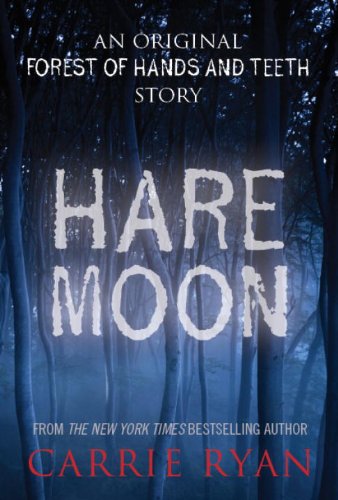
Short Story Spotlight: "Hare Moon" by Carrie Ryan

Wednesday, October 12, 2011

For this month's Short Story Spotlight, I am deviating a bit from my normal fare of classic short stories available for free online. When I heard there was a short story prequel to The Forest of Hands and Teeth, I knew that I had to get my hands on it. While it isn't free online, you can either read it in the book of short stories Kiss Me Deadly by Trisha Telep, or you can buy the story separately as a Kindle Original for $1.99.

"Hare Moon" is the story of Tabitha, the head of the Sisterhood in The Forest of Hands and Teeth. As a young girl, she is not chosen for a wife at Brethlaw and becomes a part of the Sisterhood. However, she aches to know what is beyond the fences of the village, and sneaks away as often as possible. One day she meets a boy from another village, Patrick, and they fall in love, agreeing to meet each month two days after the full moon. However, in the times between their meetings, Tabitha learns more about the history of her village and the role the Sisterhood has played, and feels the burdens of duty press upon her. The balance between caring for her village and the love she feels for Patrick weigh on her, and in the end she must make a painful choice.

I liked that "Hare Moon" showed a different approach to take to the village. While Mary in The Forest of Hands and Teeth resisted passionately any hold the village had on her, longing only to escape and seeing her experiences there as restrictive, Tabitha feels a sense of obligation. She understands that to keep the village safe, many sacrifices have been made, and she feels a pressing sense of duty to care for her village and respect the lives of those that have died to sustain it. However, in fulfilling that duty, something that could be seen as altruistic, Tabitha loses much of her humanity. In the story, she describes it as choosing survival over life.

I also thought Tabitha's view of the Unconsecrated was very different and interesting. She doesn't hate them or resent them for forcing her to keep her life walled and protected. She envies them - she has so much unrestrained passion for life that she wants to need and desire as much as they do. She unequivocally believes she will join them some day, and doesn't necessarily see that as a negative thing, although she isn't rushing out into the forest on a suicide mission.

Overall, I found this to be an interesting addition to The Forest of Hands and Teeth. I haven't read the other books in the series yet (although I took them out from the library this week - hooray!). The story was intense and haunting, certainly not a comfortable read, but a thought-inspiring one.

YA Friday: Hold Me Closer, Necromancer by Lish McBride

Friday, October 07, 2011

Title: Hold Me Closer, Necromancer
Author: Lish McBride
Series: I've heard there will be a sequel. I know nothing else.
Genre: YA, Paranormal
Publisher: Henry Holt and Co., 2010
Source: Library
Read For: FYA Book Club, R.I.P. VI

Sam is a college dropout who flips burgers and skateboards. His life is pretty simple, and fairly enjoyable (minus the fact that he hates his job and feels like he has no idea what he actually wants from life. And the fact that his landlady won't stop hassling him about finding a girlfriend). However, after an unfortunate smashed taillight and a violent confrontation, Sam learns that there is a whole world of supernatural powers surrounding him, and that he has irritated one of the most powerful. And now that powerful man wants him dead. Crap.

This book was significantly more enjoyable than I expected it to be. While there are a few paranormal books that I enjoy, in general they aren't my first pick. I also wasn't so sure about the scary factor - I love a good creep-out, but it's always hard to tell if a book will be scary in a thrilling way or a disgusting way. However, right away Hold Me Closer, Necromancer racked up several points in its favor.

Point 1: Clever song titles at the beginning of each chapter. "Hold Me Closer, Tiny Dancer" was stuck in my head for the week that this book was sitting on my night stand, not aided by the fact that my husband burst into spontaneous song every time he saw the book. But still, clever.

Point 2: Sam was college-age. I've seen the want for more college-age protagonists in YA fiction all over the blogosphere, and I completely agree. While Sam was not actually in college, it was great to read about someone close to my age (although I guess technically, at 23, I am a little older than college-age, even though I am still in college. Dang it).

Point 3: Sam himself. I loved this character. He was a believable guy, not too-perfect-to-be-true like most male leads, but he was still sweet. He was protective of his sisters and his female friends. He was a little bit of a softie (evidenced by the fact that he was a vegetarian). He wasn't quite sure what he wanted from life, but he was a good person and a good friend.

Point 4: Humor. This wasn't a book that took itself too seriously. I'm not afraid of books that take themselves seriously - right now Carrie Ryan's The Forest of Hands and Teeth comes to mind, as a book in the same genre with a completely different tone - but I like a little lightness now and then, and this book supplied it.

Point 5: Still a little creep factor. I didn't want something too gory, and for the most part this book delivered. (And when there was violence, it was usually tempered by some humor and self-deprecation, aka Sam keeps getting his butt kicked because he has annoyed the All Powerful Necromancer). However, there were a couple of creepy scenes. Which I appreciated.

So, the book was better than I was expecting. Still not perfect. There wasn't a lot of depth or character development, which I think can happen with humor, but doesn't have to happen. While I enjoyed reading about the characters, I didn't necessarily connect with them. However, still an enjoyable, light read for Halloween.

3 stars

Warnings: Brief sensuality, creepy violence (think severed, cauterized heads)

The Night Circus by Erin Morgenstern

Tuesday, October 04, 2011

Title: The Night Circus
Author: Erin Morgenstern
Genre: Fantasy
Publisher: Doubleday, 2011
Source: Library
Read for: R.I.P. VI Challenge

"The circus arrives without warning." So begins the magical foray into Le Cirque des Reves, a sliver of dreamland that appears without warning, is only open from dusk until dawn, and enchants and fascinates its visitors, often making them devoted followers for the rest of their lives. At the heart of the circus are two enchanters locked into a magical duel. However, as the circus grows around them, they begin to pool their efforts, creating sights and experiences that are more and more magical, until the magic turns inward and compels them to love. Who will be left standing, and will the circus survive the standoff?

The Night Circus is a book that has received a great deal of attention since it was born into the bookstore world two weeks ago. Already I've seen bloggers and readers turn away from it because of the hype. Because of that reaction, I am hesitant to say what I'm about to tell you. I don't want anyone to avoid this book because they don't want to follow popular sentiment or be disappointed in a story that is lauded with too much energy. However.

This book has firmly lodged itself on the hallowed shelf that holds my "favorites." In fact, because I am a weirdo and actually rate books and movies and songs in my head, I will tell you that it is now my third favorite book. So. If you are turned off by hype, please avoid the rest of this post. Please avoid all the other gushing reviews and glowing praise, get the book for yourself, read it, and come back to me. However, if you want to know why I loved it, read on.

Reading The Night Circus is an incredibly rich reading experience. The prose is abundant with vivid images and sensations - you can taste the chocolate mice (with almond ears and a licorice tail), feel the bite of the bonfire's heat through the chilling air, see Madame Padva's luxurious velvet gowns. You can feel the magical energy the circus is humming with on your skin. At the same time, the story itself is told sparsely. While every image is illustrated thoroughly, leaving no sense to be questioned, the pieces of the story fall into place slowly, told in scenes that happen sporadically, skipping back and forth between different years and characters. The story unfolds delicately. We don't see inside the characters' minds. However, once the final pages are reached, the loose ends are tied. You may not understand all the mechanics of the book, all the reasons why things occurred the way they did. Some aspects of the story are still shrouded in mystery. However, it was satisfying for me. The mystery was part of the enjoyment.

The characters themselves are also a delight. They are all unique, eccentric, and talented, adding different qualities to the circus. There is no villain (although Prospero is probably the closest thing). The characters are complex with different motivations. They all do good, and they all do wrong. I enjoyed getting to know all of them.

And of course, the circus itself. Several chapters in the story are told in second person, guiding the reader through the circus. I thought this was a very unique and effective device to immerse the reader in the circus. The narrative part of the story vacillates between the past and a more immediate present, but instead of being disjointing, the personal journeys interspersed between chapters gave me the opportunity to experience the circus for myself. It made the story personal to me - I cared about the characters and the circus. I wanted both to survive. I was fully invested. And really, wouldn't it be lovely if we could visit a place like that, a place fully devoted to experiencing beauty in every sense?

This is one of the few books that I read as slowly as possible. I did not want it to end. If I could, I would be a reveur and dress in black and white and red and follow the circus around the world. I would own an Herr Thiessen clock. Reading The Night Circus was one of the most positive and delightful reading experiences I have had in years, and I cannot recommend it enough.

5 stars

Warnings: Brief sensuality, there might be language but I can't remember

Top Ten Tuesday: Books I Want to Reread

Tuesday, September 27, 2011


I once had a teacher in high school who said, "There are too many books to read to reread ones you have already read." I beg to differ - when I finish a book, I want the relationship to continue. Since I've started blogging, I've found it harder to find time to reread books, mainly because now there are so many that I hear about that are new to me. However, there are definitely several that I want to go through again.

1. The Help by Kathryn Stockett. Okay, actually, I'm cheating a little bit, because I'm rereading it right now. I read through it so quickly the first time that I want to read it once again before I go see the movie (I'm a dollar theater kind of girl).
2. The Harry Potter books by J.K. Rowling. Watching the movies illustrated to me just how much I've forgotten, so I'm looking forward to reading all the books in order to get the entire story at once. (I'm planning on doing this in May of next year).
3. The Namesake by Jhumpa Lahiri. I read this right after graduating high school. I remember getting quite a bit out of it at that time, but I think I would have an even better experience now, so I am eager to revisit it. 
4. Les Miserables by Victor Hugo. This monster took me a very long time to read, and I was a sophomore in high school when I read it. Now I have the new Julie Rose translation and all I'm waiting for is the courage to make the big push and read it again! (Yes, it's still intimidating the second time around).
5. The Guernsey Literary and Potato Peel Pie Society by Mary Ann Shaffer and Annie Burrows - This book just made me warm and snuggly all over when I read it. I am hoping to read it again soon when I am in the mood for a little something romantic but sweet.
6. My Antonia by Willa Cather. I read this in the eighth grade when my teacher recommended it to me, telling me it was her favorite book. I think I had hints of understanding when I read it, but most of it was below the surface, and I just remember thinking it was strange. I want to experience it again and see what I think now that I am a bit more grown up.
7. His Dark Materials Trilogy by Phillip Pullman - I've reread this numerous times, and every time I notice something new about it. 
8. I Capture the Castle by Dodie Smith. I loved this book the first time around, and I want to visit it again.
9. In the City by the Sea by Kamila Shamsie. Kamila Shamsie is the author of my favorite book, and I've loved everything she's written... except this book. It is her first, and it was very, very different from the other books I've read by her. I want to read it one more time now that I am not surprised at how different it is, and see if I get something out of it. 
10. Rebecca by Daphne DuMaurier - I am planning to reread this for the R.I.P. challenge. I read this in the same English class that My Antonia was recommended to me in, because we got to have "book clubs" and choose from lists of five books every few weeks to read together in small groups. I think that was one of the coolest English classes I had. 
11. East of Eden by John Steinbeck. This is another monster, so I haven't really been able to justify taking the time to read it again. It's so good though, that I am going to need to reread it soon.

I could probably list dozens more but I suppose going one over is enough. What books do you want to reread, or reread on a regular basis?

PS: Graciously hosted by The Broke and the Bookish

The Memoirs of Sherlock Holmes by Arthur Conan Doyle

Monday, September 26, 2011

Title: The Memoirs of Sherlock Holmes
Author: Arthur Conan Doyle
Genre: Classic, mystery
Publisher: (This version) Penguin, 2011
Source: NetGalley
Read for: Review, R.I.P Challenge

Sherlock Holmes is truly a name that needs no introduction, but I do briefly want to explain this version. It is meant to correlate with the film coming out in December (anyone out there as excited as I am?). The first film was based on The Adventures of Sherlock Holmes, a similar volume containing short stories of Holmes' and Watson's adventures, and I am under the impression that this release contains the inspiration for the new film. It has a significant story about Professor Moriarty, so I'm guessing that is the case. Regardless, I loved the first movie and The Adventures of Sherlock Holmes (I'm still hoping to make use of my plan to be Irene Adler for Halloween one of these years) and I as excited to read Memoirs.

Dorky Holmes. 

One thing I immediately noticed is that the Sherlock Holmes of Memoirs is much saltier than the Holmes of Adventures. It may just be my memory, but in Adventures, he is milder - still
obsessive, still inhumanly intelligent, but a little more believable as the icon of Sherlock Holmes I always pictured as a child (you know, funny hat, mustache, spectacles, a little dopey). However, the Sherlock Holmes of Memoirs is much more akin to the character pictured in the first film  - a boxer, addicted to cocaine, living in filth when he can't find a case, and, overall, rather alluring. We also find out more details from Holmes' personal life in Memoirs - we have the opportunity to read his first case, before his friendship with Watson began, and are also introduced to a family member. We see Holmes a bit more vulnerable than perhaps we've seen him before (although I should concede that Adventures begins with Holmes being bested by Irene Adler, definitely a vulnerable spot for him). In any case, I enjoyed the characterization of Holmes much more in this book - I feel like he is more developed as a character. And I was happy to see that the filmmakers weren't just taking liberties and making Holmes more appealing - he really does have the traits he is given in the films.
Awesome Holmes. 

The stories themselves left me with mixed feelings. I'm not generally a mystery lover - it is one of the few genres I tend to avoid (although I'm planning on giving Jasper Fforde a try next year). The Sherlock Holmes books are among the few mysteries that I read, and it is because I enjoy Holmes and Watson's personalities more than anything. Stories that did stand out to me were "The Musgrave Ritual" because it was creepy and unique, "The Greek Interpreter" due to the family member we were introduced to and the awesome interplay between Holmes and his relative, and "The Final Problem," because it related to Moriarty. While not all the stories stood out to me, they were all well-written and interesting. It's always fascinating to see how Holmes finds his solutions - occasionally I can pick them out, but in general it isn't until his logic unveils the secret that I can understand how he solved the problem. It would be interesting to have known Arthur Conan Doyle - I wonder if he puzzled things out the same as Holmes.

So overall - an enjoyable addition to the Sherlock Holmes books. By no means my favorite book of all time, but certainly enjoyable, and I can't wait for the movie to come out.

3.5 stars

Warnings: Unlawful behavior. Obviously.


Related Posts Plugin for WordPress, Blogger...