Showing posts with label Short Story Spotlight. Show all posts

Short Story Spotlight: "The Witch of Duva: A Ravkan Folk Tale" by Leigh Bardugo

Thursday, November 08, 2012

Image credit: Anna and Elena Balbusso
I stumbled across "The Witch of Duva" when I was looking for release dates of trilogies that I had started. I loved Leigh Bardugo's first book in the Grisha Trilogy, Shadow and Bone, so I decided "The Witch of Duva" would be the perfect choice for this month's Short Story Spotlight.

The story is set in the Russia-like fantasy land of Ravka, in a small town where there is never enough food to eat and girls go missing. No one knows if it is an evil spirit, a witch, or something else entirely, but Nadya has her suspicions. One night she strays from her home and comes across a secret in the woods that she had never expected.

"The Witch of Duva" had many elements that I love in a story. I loved the element of folklore, creating a sort of culture or mythology for this fantasy world. I also really enjoyed Bardugo's lush descriptions of delicious food. When I had the chance to hear her speak at the Provo Library during the Fierce Reads tour this summer, she mentioned that she loved writing about food in Shadow and Bone, and this is clear in "The Witch of Duva" as well. Despite eating a full (and rather unhealthy) dinner tonight, my stomach is rumbling from the descriptions of meat in creamy sauces and fragrant pastries baking on the oven. The final element that really drew me in is the aspect of a dark fantasy -- it isn't horror, exactly, but there is a creepy element tinged with the supernatural that makes this story haunting and a little eerie.

Leigh Bardugo's imagery is vivid and at times disturbing throughout the story as the characters deal with the horrors of hunger and abuse. The powerful images will definitely make this story difficult to forget. In addition, the story has a startling plot twist that I couldn't see coming at all. It is always more enjoyable for me to be surprised instead of having everything figured out.

If you enjoyed Leigh Bardugo's writing and/or the fantasy world she created in Shadow and Bone, you won't want to miss "The Witch of Duva," which is available free online. In addition, if you like folklore (albeit imaginary folklore), dark fantasy, or really good food descriptions, you should definitely check this one out.

Short Story Spotlight: "Ligeia" by Edgar Allan Poe

Thursday, October 11, 2012

I was very intrigued by the short story "Ligeia," which I had never heard of before, when I read Nevermore by Kelly Creagh last October. The premise is this: the narrator falls in love with a woman named Ligeia and marries her, although he knows very little about her. She is beautiful and entrances him, but at times there is something odd about her, particularly about her eyes. Eventually she dies, and the narrator is tormented. He comes into an estate and decorates it in a very dark, creepy way. He ends up marrying a woman named Rowena, who slowly declines and is overtaken by an illness. After she has allegedly died, he sits with her corpse, only to see it animated multiple times throughout the night. At the last, she rises up again and comes to him, but it is Ligeia possessing Rowena's body.

There were elements of this story that I enjoyed -- the elements that are more or less Poe's trademarks. His writing is very beautiful, even when the subject matter is extremely disturbing, and I can vividly imagine everything he describes. I also enjoy that chilling thrill at the end of a scary story, and it was certainly present in "Ligeia."

However, I felt that it took Poe a long time to get to the point in "Ligeia." While I realize that his extensive descriptions are partially what make everything so vivid, he focused at times on elements of the story that were less interesting to me and skimmed over those that I would have liked to know more about. He spends pages and pages discoursing on Ligeia's appearance and beauty, every detail about her, which became boring to me very quickly. Then he skimmed over his relationship with Rowena, mentioning briefly that he "hated" her, but never giving any inclination of why he then chose to marry her (is it just "a man's needs" or something?). While I enjoyed the "chill" at the end of the story, I felt that it took a long time to get there.

I guess in brief, while "Ligeia" was a creepy and enjoyable story, I wish that the preamble about Ligeia's appearance had been abridged while the actual events of the story had been more fleshed out. Still, it was interesting to finally read the story after seeing it referenced in Nevermore.

Short Story Spotlight: The Masque of the Red Death by Edgar Allan Poe

Thursday, September 13, 2012

{Image Source}
I knew Edgar Allan Poe was the perfect choice for a little fall creepiness. And when I turned to my Kindle to read from The Poe Nevermore Collection, a small compilation put together by Kelly Creagh of some of the Poe poems and stories highlighted in the novel Nevermore, I was excited to see that "The Masque of the Red Death" was first. I read a few Poe stories in high school, and this one stands out in my mind more than any other. I was excited to revisit it.

A brief synopsis: The rich and somewhat cavalier Prince Prospero decides to evade the Red Death, a plague that has been, well, plaguing his country, by hiding in an abbey and inviting several hundred of his best friends to do the same. They keep themselves entertained through their self-imposed quarantine by having parties and revelries. However, one particular night, in which Prospero has arranged seven rooms in different colors for a masquerade (and the last, in disturbing black and blood red, seeming to mimic the red death, along with a clock whose dire tolling interrupts the party every hour), someone arrives dressed as the Red Death. Everyone is appalled at his lack of tact, but when they try to get rid of him, he proves to be insubstantial, and everyone dies.

The two things I really remembered about "The Masque of the Red Death" were that there were multi-colored rooms and that it was freaky (par for the course with Edgar Allan Poe). What stood out to me this time around was the haunting beauty of Poe's writing and his attention to disturbing detail.

In the past, I definitely never associated Poe with beauty. His stories are so twisted and nightmarish, how could anyone? However, there is something spell-like and enchanting about his writing. Haunting seems a cliched word, but it really is the best word. Every image was vivid in my mind as I read, and even the darkest were described in beautiful language, making it more like a dark fairy-tale with an unhappy ending.

I think what makes the beauty of Poe's writing go dark is not just the disturbing outlines of his plotting, which granted are disturbing enough, but the details he adds to further frighten and haunt his reader. For example, the Red Death isn't just a plague -- it kills in about thirty minutes. And the masked stranger wasn't just dressed as the Red Death -- his mask and clothing were literally spattered with blood. Every detail adds to the atmosphere and the chills of the story.

Edgar Allan Poe is a masterful writer, and "The Masque of the Red Death" is a prime example of his skill. I am looking forward to reading more of his short stories and poetry as the fall goes on.

Short Story Spotlight: The Throne of Glass novellas by Sarah Maas

Thursday, August 23, 2012


Throne of Glass by Sarah Maas recently came out, and I will be posting about it on September 11th as part of a blog tour. However, I had heard that it was best to read the novellas in the series first, so I decided to dig into those early, and I am so glad that I did. They were entertaining and exciting, and I absolutely love Celaena. For this Short Story Spotlight, I will give you a brief synopsis of each of the four novellas, and then I will just give an overall review of the set of four.

In The Assassin and the Pirate Lord, Celaena Sardothien is assigned by her Assassin Lord, Arobynn, to visit a pirate lord and supposedly extract a payment for having killed members of the Assassin's Keep. However, the mission is not what it seemed to be initially, and soon Celaena has to decide if she will follow her gut or follow orders.

In The Assassin and the Desert, Celaena has been sent to train with the Mute Master, leader of the Silent Assassins in the hot, barren desert. Initially she is furious about this responsibility, but as she learns new tactics -- and makes new friends -- she realizes that her "punishment" is not as severe as she previously thought it. However, an unexpected betrayal and worries about a man she left behind in the Assassin's Keep keep Celaena guessing about whether or not people are what they seem.

In The Assassin and the Underworld, Celaena's master, Arobynn, seems to be redeeming himself when he gives her the opportunity to right a moral wrong. However, the task is dangerous, and further complicated by the fact that the assassin working with her is extremely distracting.

In The Assassin and the Empire, Celaena is finally free from her duties and ready to start her own life. She thinks she has found love and independence. However, Arobynn has other ideas.

I had my doubts about this series. While I'd heard mostly love for Throne of Glass, the idea of someone being an assassin was not especially appealing to me. I wasn't quite sure what to expect. I've seen plenty of tough, fighting heroines in the last couple of years (Katniss, Katsa, and Tris just to name a few) and I wasn't sure how I felt about another character from the same mold. Fortunately, Celaena was completely different from what I was expecting. Yes, she is lethal and can take good care of herself. However, she also has an extremely girly, vain aspect to her personality. I think this has annoyed several people in reviews I have read, but I absolutely loved it. I enjoyed this girl that is irritated when she can't buy pretty underwear and go to her dance lessons, the girl who was kind of a brat to the man she loved because she didn't want to be too vulnerable. Yes, I think in some ways Celaena is annoying, but for some reason it was refreshing to me. She was completely herself and much more realistic than someone who would be totally self-sacrificing and heroic all the time. I also love that contrast of someone who wants to do what is right and has this powerful skill, but who is still subject to some weaknesses (especially jewelry).

I also loved the setting. While the novellas don't go into specific details or explanations about the state of Adarlan and the rest of the world, it is easy to glean information from the exchanges and the windows that we are shown. I am excited for more development in Throne of Glass and the following books (I hear there are six? Kind of excited for that many, to be honest).

And finally, the plot was awesome. I read all these novellas on the treadmill, and my workouts were finished before I had even realized I worked up a sweat (and for a pregnant woman walking four miles, that is significant). I was completely invested and completely swept up. I also loved the pacing. Each of these novellas is about ninety pages long, making the stories long enough to be complete but short enough to keep my interest.

I haven't yet read Throne of Glass, but these novellas were definitely an intriguing introduction. I'm looking forward to getting to the meat of the novel itself.

4 stars

Warnings: Talk of prostitution, violence, some language, some innuendo

Short Story Spotlight: "Snow, Glass, Apples" by Neil Gaiman

Saturday, May 19, 2012

I'll tell you up front that "Snow, Glass, Apples" is the only thing by Neil Gaiman that I have ever read (shame on me). I actually read it a while ago and never posted anything about it. When the short story I read for this month's post left me completely cold, I found myself thinking of this creepy little story again, and decided it was more deserving of mention than the book I read.

"Snow, Glass, Apples" is a retelling of Snow White from the "evil" queen's point of view. For some reason, the princess holds a strange fixation for people, particularly for men, but her young stepmother sees beyond the princess's strange allure to a lurking darkness within.

I know that I will enjoy Gaiman's other works just from the beauty of the language he uses in "Snow, Glass, Apples." The words evoke images that are descriptive not in the sugary, sentimental way but with a sharp, diamond-cut cleanness. The story is not beautiful and romantic like a traditional fairy tale; it is disturbing but poignant, and the images do not fade quickly.

The creativity of the story is also powerful. I don't want to give away the crux of it, what Snow White really is, because figuring that out was part of the fun of reading the story, but I will say that I was amazed by how Neil Gaiman took the elements of the fairy tale and twisted them neatly so that they told a completely different story without being corrupted at all.

Don't read this story when you are alone at night -- it is very creepy. Also bear in mind that with that creepiness, there are some mature themes in the story. However, it is a brilliant and well-written retelling of Snow White, and one that is worth reading.

Short Story Spotlight: "Hana" by Lauren Oliver

Thursday, March 22, 2012


It seems to be a thing lately for YA authors to write short little companions to their trilogies. In some ways it seems like a ploy to make money, but it works -- I tend to get my hands on them, eager for more. I was especially excited when I noticed this little story, for two reasons: First of all, I still haven't gotten my hands on Pandemonium and I've been hungry for more Delirium for over a year, and second of all, one of the things I had wished for from Delirium was more Hana. I loved her as a character and I wanted to get to know her better.

The story gives us a snapshot of Delirium's story from Hana's point of view. It starts with the first party Hana invites Lena to, takes us through their fight, and through the raid where Lena is bitten by the dog. It ends with Hana getting to know Alex and her reaction to him. Be aware that while this review won't have spoilers for "Hana," it will have some Delirium spoilers. 

The story reveals a shocking addition to Delirium, one I hope is included in Pandemonium, because it seems pretty fundamental to the overall story, and I guess I perceive these short story snippets that are all the rage to be additional and nonessential to understanding the story -- just extras for those who are obsessed. Other than the shocker, which I am not going to spoil for anyone, the story was a bit lackluster for me. I was hoping for more detail -- how it works out for Hana once she is cured and married to the mayor's son, more of her personality. While we are given more of her motivation for attending the underground parties -- descriptions of moving music written in Oliver's stunning prose -- this didn't feel very revelatory to me. I was aware that Hana loved the music from Delirium, and while I had the chance to read her experience in Hana's voice, it wasn't anything new for me.

We also receive insight into why Hana, seemingly the wild and more rebellious of the friendship, winds up being cured, while the more cautious and rule-abiding Lena falls into a full-blown deliria infection. When I read Delirium, I thought it was just the expectations of her family, the pressure of her high-status match. However, "Hana" reveals that Hana had a love interest of her own that she met at the parties -- a love interest that she learns is just experimenting before his inevitable cure, who doesn't want to feel the deep connection of true deliria. This disappointment leads Hana back to what she views as reality -- deliria is a disease, something to be rooted out -- it causes people to act foolish and only results in hurt. Despite her longing for freedom, she begins confining herself to the rules, despite the fact that she continues to spend time with Lena and Alex, apparently flouting the rules of her society.

"Hana" offers a few new insights into Lena's story, but I was disappointed that I didn't get more of a feel for Hana's personality. Or, I suppose, I was just disappointed by the facets of Hana's personality that were revealed -- she shrinks as a character, retarding her growth into passive conformity. It is a decent read, but probably not worth the $2.99 I paid for it.

Short Story Spotlight: "Chicxulub" by T. Coraghessan Boyle

Thursday, March 01, 2012

T. Coraghessan Boyle
The short story "Chicxulub" by T. Coraghessan Boyle, was recommended to me by JoAnn at Lakeside Musing. I am so happy that she recommended it, because it was absolutely stunning and heartrending. Published in The New Yorker in 2004, it is just one of several of Corgahessan Boyle's contributions to the magazine, and I will definitely be returning for more.

The story compares a personal tragedy to the asteroid Chicxulub, which decimated the dinosaurs and utterly changed the face of the earth. I don't want to go into too much detail because part of the experience of the story was the anticipation and build-up to the climax, but I will say that I was almost in tears throughout the story. The juxtaposition of the personal events in the author's life to a slowly building description of larger and larger asteroids and the destruction they wreaked on the earth was powerful and portentous. And the message at the end of the story was clear -- everyone has a Chicxulub. It comes at different times for different people, but at some point everyone will experience a decimation of everything they've ever known, and they will have to start over.

The language in the story is clear and detailed, taking the reader directly into the narrator's experience. He gives us every moment, every emotion, with no filter, only an increasing sense of panic and growing hopelessness. There is no patronizing, literary tone here -- only the raw, painful, minute details embedded by intense fear and pain.

The author presented an idea only in passing that I found very interesting. It doesn't fit in with the story as an overarching theme (at least, not in a way that I picked up) but I found it interesting nonetheless. He mentions that individual death, while of course painful for the individual and their loved ones, does not really decimate anything.
Death cancels our individuality, we know that, yes, but ontogeny recapitulates phylogeny, and the kind goes on, human life and culture succeed us. That, in the absence of God, is what allows us to accept the death of the individual.But when you throw Chicxulub into the mix—or the next Chicxulub, the Chicxulub that could come howling down to obliterate all and everything even as your eyes skim the lines of this page—where does that leave us?
Being in the career I'm in, there is plenty of cause to think about death -- more than is present in the day-to-day lives of most. And while I was reading about Chicxulub decimating the world, I thought about whether or not that would be sad. And would it, really? We would be gone so fast that we wouldn't even have time to feel pain. We would simply blink and then our bodies would cease to be. I think I disagree with the author's assessment of the impact of individual death vs. total annihilation -- individual death leaves us with a hold that taunts us with its concrete edges, but annihilation just leaves a void -- there is nothing there, but nothing to contrast with the absence, either.

Anyway, that was a pretty large tangent. The last thing I want to mention in this story is also somewhat personal. As the narrator and his wife go to the hospital, he mentions the nurses -- how they are more focused on their computer screens and heart-rate monitors, how they are able to be removed from the situation. "Every day she sees death and it blinds her." It made me think of how I seem to my patients. I try to be compassionate, to empathize with them, but the truth is that I don't have cancer, that I am not faced with death, and that, in that way, I cannot possibly understand to the full extent what they are experiencing. I think the image this story presented will stay with me in future patient interactions.

To sum up -- this story is powerful and evocative. I think it will appeal to most audiences, but even if you don't think it is your thing, I think you will learn something from it. Read it! (And thanks again to JoAnn for recommending it to me!)

Short Story Spotlight: "The Cricket on the Hearth" by Charles Dickens

Saturday, January 28, 2012

Dear Mr. Dickens,

It has been quite some time since we last corresponded, and I am delighted to inform you that I had the pleasure of enjoying one of your Christmas-themed short stories, "The Cricket on the Hearth." I would argue with you that it isn't truly Christmas themed, as the story takes place in late January and doesn't mention Christmas-time but instead treats of weddings and anniversaries. However, I enjoyed the story so much that I was completely willing to overlook the fact that the cheer it imparted was not, in fact, Christmas cheer -- just a general sort of cheer about love and friendship and family.

I felt John Peerybingle's insecurities along with him as he wondered how his beautiful, young wife could possibly be in love with an older man like himself. I watched his mind reel as Tackleton planted nerve-wracking suspicions into his head, watched him fight the hope that swelled up in him when the good spirit of the cricket on the hearth tried to make him see the truth. I was just as shocked as Peerybingle when he thought his suspicions to be confirmed; I couldn't believe that his faith in his wife was misplaced. I was relieved and experienced real comfort when everything was restored as it should be. I think that is your real talent, Mr. Dickens -- while at times your characters seem like comical caricatures, they bring up powerful, universal emotions. And they leave me with a feeling of satisfaction. "The Cricket on the Hearth" is the perfect story for a winter's night, curled up in a sweater and Snuggie with hot cocoa. It is even cozier than tea.

So, Mr. Dickens, our relationship keeps improving. I think friendships are a little more interesting when everyone isn't always in perfect, boring agreement. I've even come to accept my arch-nemesis, A Tale of Two Cities -- all of the false starts were worth Sidney Carton. "The Cricket on the Hearth" removed another brick from the wall between us. I hope to continue to enjoy this relationship, sir.

I remain,
Your faithful correspondent.

Post script: In case you are unfamiliar with the Snuggie in your own particular time period, it is a delightsome invention that enables ultimate warmth with the free use of the hands. It is the perfect way to read a book, if only one does not concern oneself about one's own foolish appearance. I have enclosed a photograph.


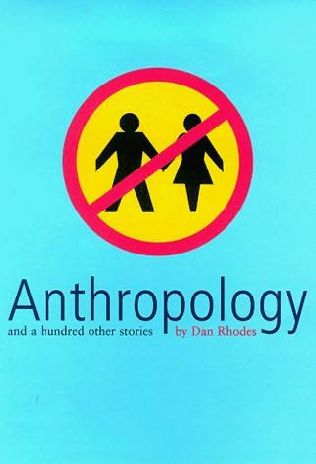
Short Story Spotlight: Anthropology by Dan Rhodes

Thursday, November 03, 2011

Title: Anthropology
Author: Dan Rhodes
Genre: Flash fiction
Publisher: Canongate, 2000
Source: Personal copy
Read for: Nostalgia

This month's short story spotlight is going to be a little different from what I usually do. I want to review Anthropology, Dan Rhodes' anthology of 101 stories about love that are all 101 words long.

I discovered this book when I was lurking around the tiny public library in my home town. I was instantly intrigued. I'd never heard of flash fiction, but I loved the concise style. I don't think I ever checked this book out -- I would just find it on the bookshelves and read a few more stories every time I came to the library. When I saw it for $1.99 on Kindle I had to buy it (unfortunately, it isn't that cheap anymore).

Rhodes' tone is irreverent, ironic, and often downright bizarre. His girlfriends (and there are 101, of course) have names like Lulula, Foxglove, and Hummingbird. The stories are a little more scandalous than I remember, and I think I probably just didn't know what they meant when I read them in my early high school days. They are off the wall and all have a touch of irony. I think flash fiction (and honestly short stories in general) allow authors to experiment without investing too much time. At the same time, they require talent because it is difficult to say something important in just a few words.

Here is one of the stories to whet your appetite:
Orchid is resolute that her first kiss be perfect. I took her to Paris in the Springtime. As we gazed across the Seine at the Eiffel Tower, I made my move. She pushed me away. 'No,' she said. 'It's just not romantic enough. I'm sorry.' I took her to a deserted, palm-fringed Bahamian beach, and her response was the same. I saved and saved until finally we stood at sunset before the Taj Mahal. 'It smells funny,' she said. 'It smells, and there's poor people everywhere.' I was disappointed too. The supposedly magnificent structure paled beside those untouched, velvet lips. 
If you like bizarre, modern, and occasionally touching stories in less than a page, Anthropology will be a fun experience for you.

Warnings: Sensuality, a few disturbing images (described in words, not actual pictures. In case you were confused).

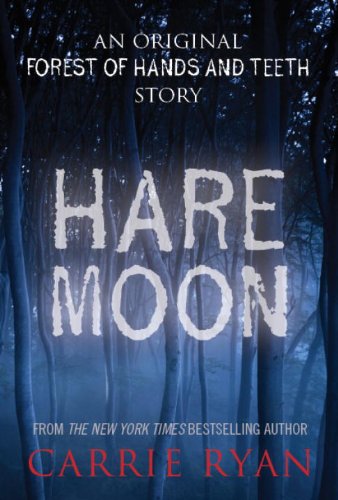
Short Story Spotlight: "Hare Moon" by Carrie Ryan

Wednesday, October 12, 2011

For this month's Short Story Spotlight, I am deviating a bit from my normal fare of classic short stories available for free online. When I heard there was a short story prequel to The Forest of Hands and Teeth, I knew that I had to get my hands on it. While it isn't free online, you can either read it in the book of short stories Kiss Me Deadly by Trisha Telep, or you can buy the story separately as a Kindle Original for $1.99.

"Hare Moon" is the story of Tabitha, the head of the Sisterhood in The Forest of Hands and Teeth. As a young girl, she is not chosen for a wife at Brethlaw and becomes a part of the Sisterhood. However, she aches to know what is beyond the fences of the village, and sneaks away as often as possible. One day she meets a boy from another village, Patrick, and they fall in love, agreeing to meet each month two days after the full moon. However, in the times between their meetings, Tabitha learns more about the history of her village and the role the Sisterhood has played, and feels the burdens of duty press upon her. The balance between caring for her village and the love she feels for Patrick weigh on her, and in the end she must make a painful choice.

I liked that "Hare Moon" showed a different approach to take to the village. While Mary in The Forest of Hands and Teeth resisted passionately any hold the village had on her, longing only to escape and seeing her experiences there as restrictive, Tabitha feels a sense of obligation. She understands that to keep the village safe, many sacrifices have been made, and she feels a pressing sense of duty to care for her village and respect the lives of those that have died to sustain it. However, in fulfilling that duty, something that could be seen as altruistic, Tabitha loses much of her humanity. In the story, she describes it as choosing survival over life.

I also thought Tabitha's view of the Unconsecrated was very different and interesting. She doesn't hate them or resent them for forcing her to keep her life walled and protected. She envies them - she has so much unrestrained passion for life that she wants to need and desire as much as they do. She unequivocally believes she will join them some day, and doesn't necessarily see that as a negative thing, although she isn't rushing out into the forest on a suicide mission.

Overall, I found this to be an interesting addition to The Forest of Hands and Teeth. I haven't read the other books in the series yet (although I took them out from the library this week - hooray!). The story was intense and haunting, certainly not a comfortable read, but a thought-inspiring one.

Short Story Spotlight: "Brooksmith" by Henry James

Saturday, September 03, 2011

Henry James is one of those authors I've heard plenty about but never attempted (although Wings of the Dove is on my TBR). As I've done in the past with the Short Story Spotlight, I thought a short story would be a good way to introduce myself to his works. I'm not sure how I came across "Brooksmith" - I have a document with ideas for my features and "Brooksmith" was heading the list. It was as good a place as any to commence, so commence I did.

"Brooksmith" tells the story of the butler of an old man, Mr. Offord, who held in his English home something akin to a salon - men would come and discuss philosophy and art and society with him. His butler, Brooksmith, was always a part of these meetings, at first only as a servant, but later coming to love and grow through them. When Mr. Offord passes away, Brooksmith no longer has the opportunity to participate in society and is instead consigned to be a member of the servant class, spending time with others of his station and separate from the conversations that became life to him, as well as separate from the friendship of Mr. Offord.

This was an interesting little visit into the life of the butler, especially as it was narrated by someone who belonged to the "society" that Brooksmith craved. The story demonstrated the inequality of status in London at the time (I'm not sure when exactly the story was meant to be set, but it was written in 1892). Brooksmith had no hope of moving up, of being accepted into higher circles now that his one window, Mr. Offord, was no longer part of his life. One of the most touching things about Brooksmith's plight for me was the fact that it wasn't money or luxury that he craved. It was society and conversation - of communicating with high-thinking minds and being seen as a friend and a member of that group, if only temporarily. When this joy is no longer a part of Brooksmith's life, he is "spoiled," as Offord's acquaintances put the issue - he is no longer content spend his life in a subservient role, being consulted only on who has come to the door or where the drinks are.

I found James' writing to be very wordy, something that put me off for the first several minutes that I read the story, but the subject matter was interesting enough to me that I was able to get past it. I think every classic author takes some getting used to, and I am certainly not going to give up on James until I manage to at least get through a novel. I am hoping that his sensitive and unique take on human nature will be present in his novels and look forward to "getting to know" him better.

Short Story Spotlight: The Wall by Jean-Paul Sartre

Thursday, July 21, 2011

When I was first exposed to existentialism in high school, I thought it was the coldest, most horrifying philosophy I'd ever heard. This sentiment came on the heels of The Stranger by Albert Camus, a book that left me feeling dark and isolated and emotionless. Whenever I heard someone mention existentialism after that, I closed my ears instantaneously.

In a literature class my second year of college, however, we talked a little about Kierkegaard - not enough for me to be able to really say anything about his philosophies or main ideas, but enough to make me wonder if existentialism was as horrifically awful as I'd previously thought. So for my Paris in July themed Short Story Spotlight, I decided to reread a story by Sartre, "The Wall."

"The Wall" follows a group of soldiers through the night before their execution. The narrator, Pablo, becomes detached from his life with the knowledge that he will be killed in the morning. He perceives himself as dead, and believes that he can't go back to living now because he has the concept of himself as mortal, that all of life would simply be the waiting he experienced in the cell waiting for his death. He comes to the conclusion that life has no value - whether he dies or another dies, it makes no difference, because they will all die - nothing can change that simple fact. Oh, right, this is why I was horrified by the concept. I was seventeen and immortal when I read this story for the first time.

Sartre also explores the concept of the absurd in this story - the fact that certain events occur in life that have no meaning and are ridiculous. One must rise above them. I think this is best understood by reading Camus's piece "The Myth of Sisyphus," another piece that was appalling to me in my idealistic high school years.

I wish I had a better understanding of existentialism. Only very occasionally do I wish that I had taken more English and literary theory classes. I wish that I had a better knowledge base for interpreting works that are philosophical or more difficult (but only occasionally because I think too much analysis blocks out the beauty and the story, which, for me, is the main point of literature - experiencing beauty in another human experience).

Anyway, this story gave me the interesting chance to review a philosophy I had blocked out in high school and to revisit the reason it horrified me then and may have some merits now (don't get me wrong, I would never subscribe to it fully, but I can see the interesting elements in the bleakness now). "The Wall" is a good little introduction to Parisian existentialism.

Short Story Spotlight: "The Princess" by D.H. Lawrence

Thursday, June 23, 2011


Ah, Mr. Lawrence. We meet at last. D.H. Lawrence is another of those writers that I am afraid of (along with James Joyce, William Faulkner, Salman Rushdie, and others), and so today, with no other ideas for my Short Story Spotlight, I decided to dive into one of his stories. Wikipedia told me "The Princess" was one of the most famous, so I selected it for my first exposure to Lawrence.

What I got from it? A whole bunch of weird paralleled with a little bit of beauty. Actually, to be honest, I can see why Lawrence is acclaimed. The story is compelling, well-crafted, and tight - my own term for having no loose ends and multiple themes woven together. But I'm getting ahead of myself.

(Spoilers in this summary, if spoilers are a problem for short stories). Essentially, the Princess is the daughter of an eccentric Celtic man. Her mother dies when she is very young, and her father brings her up to believe that something in her core essence, what he calls her "demon," is royal and different from the demons of other people. This is reflected in her behavior and character, and she often repels people with her differentness. She is referred to constantly as cold, virginal, and a changeling. However, after her father's death, she starts to wonder about the world. She thinks she wants to get married and goes to a ranch in New Mexico where she meets a Mexican tour guide. She feels a kinship with him, an "inter-recognition." She convinces him to take her to a cottage in the woods where she can see wild animals, and then, rather uncertainly, seduces him. He then considers himself owner of her and assaults her several times, and her feelings of kinship with him disintegrate into anger at any one asserting ownership over her. Eventually she is rescued, Romero is shot, and she represses the memory, eventually marrying an older man.

I was very uncertain of what to expect from this story. I'd never heard of it, and at first it had the quality of a fairy tale, describing the devoted and somewhat mystical companionship between the Princess and her father. Then it seemed to shift into a romance, describing the kinship between the Princess and Romero. Despite the descriptions of the darkness of Romero's aspect, describing him as obsessed with death and "a dark beam of light," (an interesting phrase), this still seemed somewhat innocent to me, and I thought it had the chance of thawing the Princess's icy love life. Then it becomes dark and like a nightmare. Lawrence definitely took me on a path I wasn't expecting.

I have two things to say about the writing itself. I'll give you the negative comment first, because it's always nice to have a sweet taste in your mouth at the end of a paragraph. Fragments are one of my pet peeves. I know that masters don't have to follow the rules. However, it still irritates me. On the other hand, the writing is crystal-clear and gorgeous. I could see everything in the story as if there was a photograph in front of me, and the Princess's unique and cold personality was also rendered in such a manner as to make her vivid, despite the fact that I've never met anyone like her before. "As a small child, something crystallised in her character, making her clear and finished, and as impervious as crystal." Something about that sentence it pitch-perfect. I'm not a master like Lawrence, so I can't quite put words to it. But you see what I mean, right?

I am not a literature major or very experienced in literary theory, having taken only one class on it. However, here is my overall feeling from the story: Because the Princess was raised to be different, because she spent her entire life cultivating her peculiar, individual "demon" and believing that no one else could penetrate the ice around her heart, it became reality. Even when her father passed away and she longed for someone in her life, for love, she couldn't accept anyone, even if their "demon" had a similarity with her own. When she attempted it, it turned into a nightmare, because it was anathema to the reality she created for herself. The experience was so opposed to her conception of reality that she had to repress it, and in the end married an elderly man because she had some sort of Electra complex, having only been able to experience fulfilling companionship with her father before he died.

If you have studied or have insights into the story, I'd love to hear them! While I don't believe that literary theory is essential to enjoy literature or legitimately discuss it, I am always open to learning other people's opinions and views. I'm glad I chose a short story to dive into on my first attempt with Lawrence, and hope to eventually get into a novel.

Short Story Spotlight: A Very Old Man with Enormous Wings by Gabriel Garcia Marquez

Saturday, May 21, 2011

For this month's Short Story Spotlight, I read "A Very Old Man with Enormous Wings" by Gabriel Garcia Marquez, which can be read here. I chose this story mainly because I'm trying to explore magical realism and I saw a reference to this story somewhere that I can no longer remember.

In the story, Pelayo and Elisenda are poor parents trying to save their sick child. One evening as they try to improve the cleanliness of their home after a storm, they find a very old man with enormous wings lying helpless in the dirt. Unsure of what he is, they ask a "wise" neighbor woman, who tells them it is an angel who came to take their child and advises them to club it to death. Instead, Pelayo and Elisenda imprison the "angel" in their chicken coop and charge visitors to see it. Even after the novelty has worn off, they continue to keep the angel, who develops a sort of parallel-ness with their growing child, and one day flies away.

One of the things I love most about short stories is the fact that it allows the author to explore a fancy, a strange idea. A short story doesn't involve the same commitment as a novel, so the author can indulge in the bizarre and fantastical. (Having said this, I haven't read any of GGM's novels so they might be just as bizarre). This story really conveyed a sense of wonder to me, despite the angel's decrepit appearance and lack of showy powers. A theme that struck me was that of reality differing from expectation. The people in the town have preconceived notions of what an angel can do - the neighbor woman thinks it should be killed because "angels were fugitive survivors of a spiritual conspiracy." Pilgrims think it will cure them of their varied ailments and diseases. The angel does seem to have powers, but they are not what the people expected - sunflowers bloom from their leprosy sores. The priest in the town is skeptical of him when he can't speak Latin, the language of God. The creature is never certified as an angel, but even if he was an angel, the villagers would never accept him because he is different from their expectation.

The second thing I found interesting was that, because the angel (I will just call it that because it is shorter than "the very old man with enormous wings") was a creature different from anything the townspeople had encountered, he grew up in a different way. He is a very old man who mostly lies in the corner of the chicken coop and only eats eggplant mush. However, as the child he supposedly came for grows up, getting childhood diseases like chicken pox, the angel has the same experiences. The angel begins growing new feathers and flies away, which to me seemed similar to a child gaining independence.

While I am sure there is more to the story that I did not pick up, I feel very satisfied with this story. Despite its seeming simplicity and the fact that it is subtitled "A Story for Children," I think the story has layers of meaning waiting to be interpreted. If you are interested in or a fan of magical realism, "A Very Old Man with Enormous Wings" is a great place to start.

Your Move, Dickens has a great perspective on this story as well (Google directed me there when I was searching for an image).

Short Story Spotlight: "The Shelter of the World" by Salman Rushdie

Wednesday, April 20, 2011

I'm introducing another new feature this week - my Short Story Spotlight. I have had an appreciation for the short story since eleventh grade honors English, when my teacher, Mr. Dempsey (published here, if you're interested) gave us packet after packet to analyze. My short story reading has dwindled in the last few years, and I decided an every-so-often post devoted to a short story would up my reading and understanding of the art. To me, a short story is a chance to experiment, to try out a plot device or character without complete commitment to the story. You can be a little weirder in a short story than in a novel (and I think authors often are). I think short stories are also occasionally intentionally obscure, which drives me insane.

But enough about that. The short story I am spotlighting today is "The Shelter of the World" by Salman Rushdie. It was recommended to me by my English-genius friend Allison, who has written several blog posts about Mr. Rushdie. (Her own personal blog and our group of friends' book blog) I have two of Rushdie's novels sitting on my nightstand right now, but am still nervous to start - he is intimidating to me. Allison suggested reading a few of his stories as an introduction, so I arbitrarily picked this one and gave it a read.

Very weird - check. This is about the Emperor Akbar the Great (translation: Emperor the Great the Great), who has invented a perfect wife among his harem of beautiful women, a wife who develops her own will and personality after his imagination gives her life. He also begins to experiment with the idea of referring to himself in the singular instead of the plural, thinking this will give new dimension to their relationship. When it fails, Jodha the imagined wife falls in his eyes and their relationship changes.

I'm not sure if I fully grasped the intention of the story. I followed the plot points. I know what happened. But I think I'm missing the undercurrent of meaning. Maybe I would be better at interpreting things if I'd kept studying English instead of switching to neuroscience (which may have been the most random choice in the history of the world, but I think it was a good one other than the fact that I can't understand Salman Rushdie).

However, despite feeling slightly out of the loop, this story is a delight in its writing. Rushdie's style is soothing and elegant, yet straightforward. His tone is that of a storyteller weaving magic words to paint a colorful picture. I had this same impression when I went to Borders and ended up buying The Satanic Verses - as I sat in the chair reading through the first chapter, I was slightly baffled by what was happening (two actors falling through the air, singing to each other? Say what??) but spellbound by the words. And for me, that is the best part of reading - the sheer magic brought by beautiful words. That is the most satisfying thing to devour - not the scandalous stories or the thrilling plot twists.

So while "The Shelter of the World" did not by any means lessen my anxiety about reading 600+ pages by Rushdie as opposed to just 8, it didn't turn me away either. My doubt about understanding everything he says is increased, but my security in knowing I will enjoy the book is equally increased. Now I just have to make the move to pick it up.
Related Posts Plugin for WordPress, Blogger...